Plant-forward without perfection
Plant-forward eating works best as an everyday pattern, not a purity test. The question is what fills most of the plate most of the time.
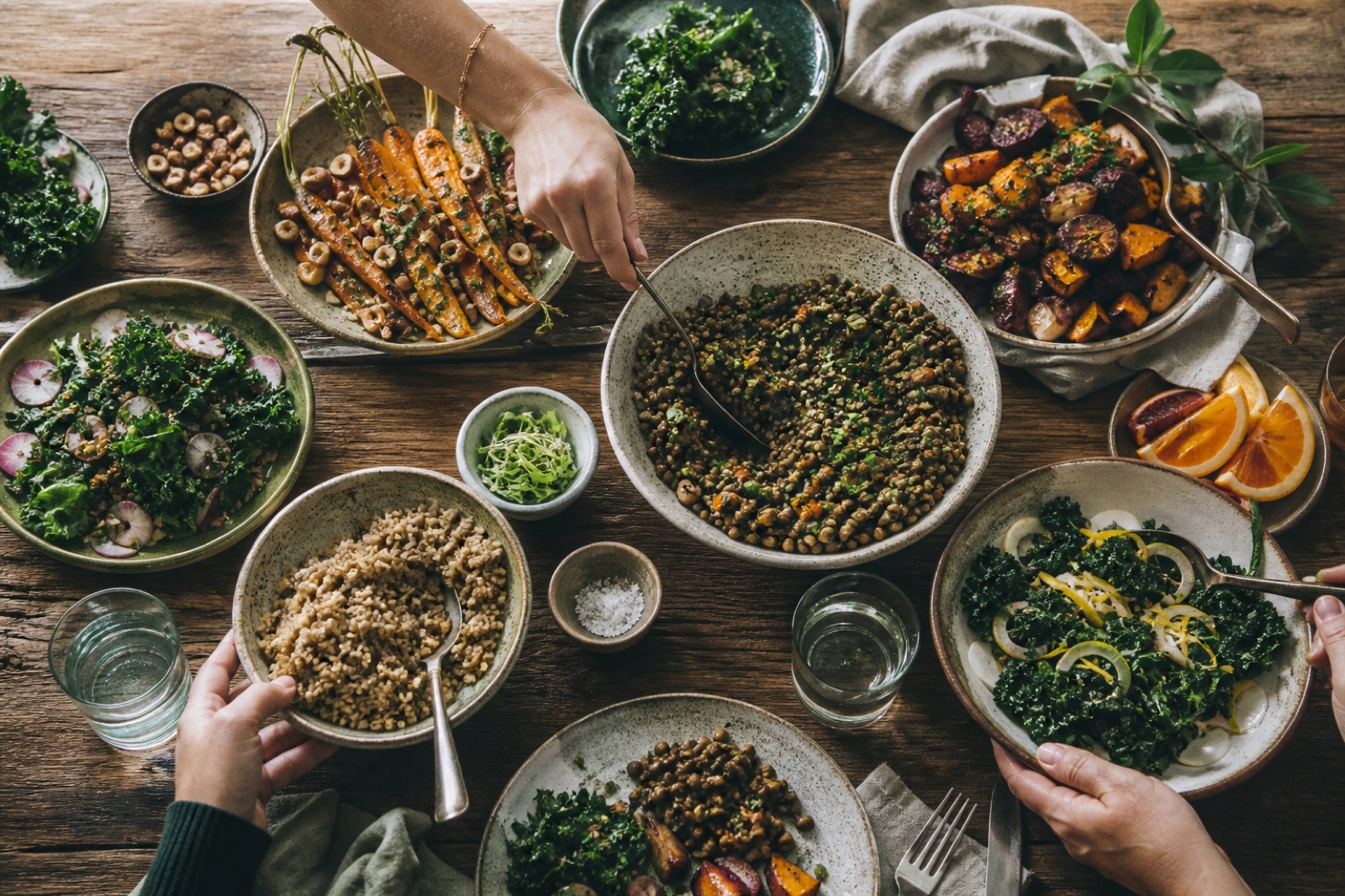
Plant-forward is intentionally a broad term. It describes the direction of the diet without requiring everyone to arrive at the same destination. For many people, that flexibility is what makes the pattern durable.
A useful plate is recognizable: vegetables or fruit, a fiber-rich starch or whole grain, and a meaningful protein source. The ingredients can come from any cuisine. The goal is not to make food joyless; it is to make nourishing choices ordinary.
Forget the label for a moment
You do not have to adopt an identity to eat more plants. Beans, lentils, tofu, vegetables, fruit, whole grains, nuts, and seeds can carry most of a meal. That leaves room for family recipes and personal preference. A pattern you can live with is more useful than a label you have to defend.
Adding food can be easier than banning it
One of the simplest changes is to add something: beans to a soup, berries to breakfast, a second vegetable at dinner, or a whole grain in place of a refined one. The meal improves without turning dinner into a referendum on willpower.
Why I grow broccoli sprouts
I grow broccoli sprouts and have taught others how to sprout them. They are a concentrated source of glucoraphanin, which the body can convert to sulforaphane, and the early human research is genuinely interesting. Interesting is not the same as proven treatment. There is also a practical drawback: bacteria thrive in the same warm, humid conditions sprouts do. Careful home growing does not eliminate that food-safety risk. Children, pregnant people, older adults, and people with weakened immune systems should avoid raw or lightly cooked sprouts.
Plant-based can still mean highly processed
A label on the front of a package tells us very little about the whole diet. I still look at fiber, protein, saturated fat, sodium, added sugar, and whether the food is displacing something more nourishing. The overall pattern is what earns the health claim.
Questions readers often ask
What does plant-forward eating mean?
It means making vegetables, fruit, legumes, whole grains, nuts, seeds, and other minimally processed plant foods the center of the diet. It does not necessarily mean vegan or vegetarian.
Can a plant-forward diet provide enough protein?
Yes, with planning and adequate total food. Beans, lentils, soy foods, peas, nuts, seeds, and whole grains all contribute. Needs may be higher with aging, intensive training, illness, or low appetite.
Are raw broccoli sprouts safe?
Raw sprouts carry a higher food-safety risk because bacteria can multiply during sprouting. People who are pregnant, very young, older, or immunocompromised should avoid raw or lightly cooked sprouts.
Sources & further reading
American Heart Association healthy dietary pattern ↗Human trial: sulforaphane absorption from broccoli sprouts ↗FDA: selecting and serving produce safely ↗
Sung Won, MD
Physician by training and health educator focused on evidence-based longevity, plant-forward nutrition, and practical habits people can sustain.
Biography and credentials →