How much protein is enough?
Protein advice has become needlessly absolute. A useful answer starts with a benchmark, then makes room for age, training, appetite, goals, and medical context.
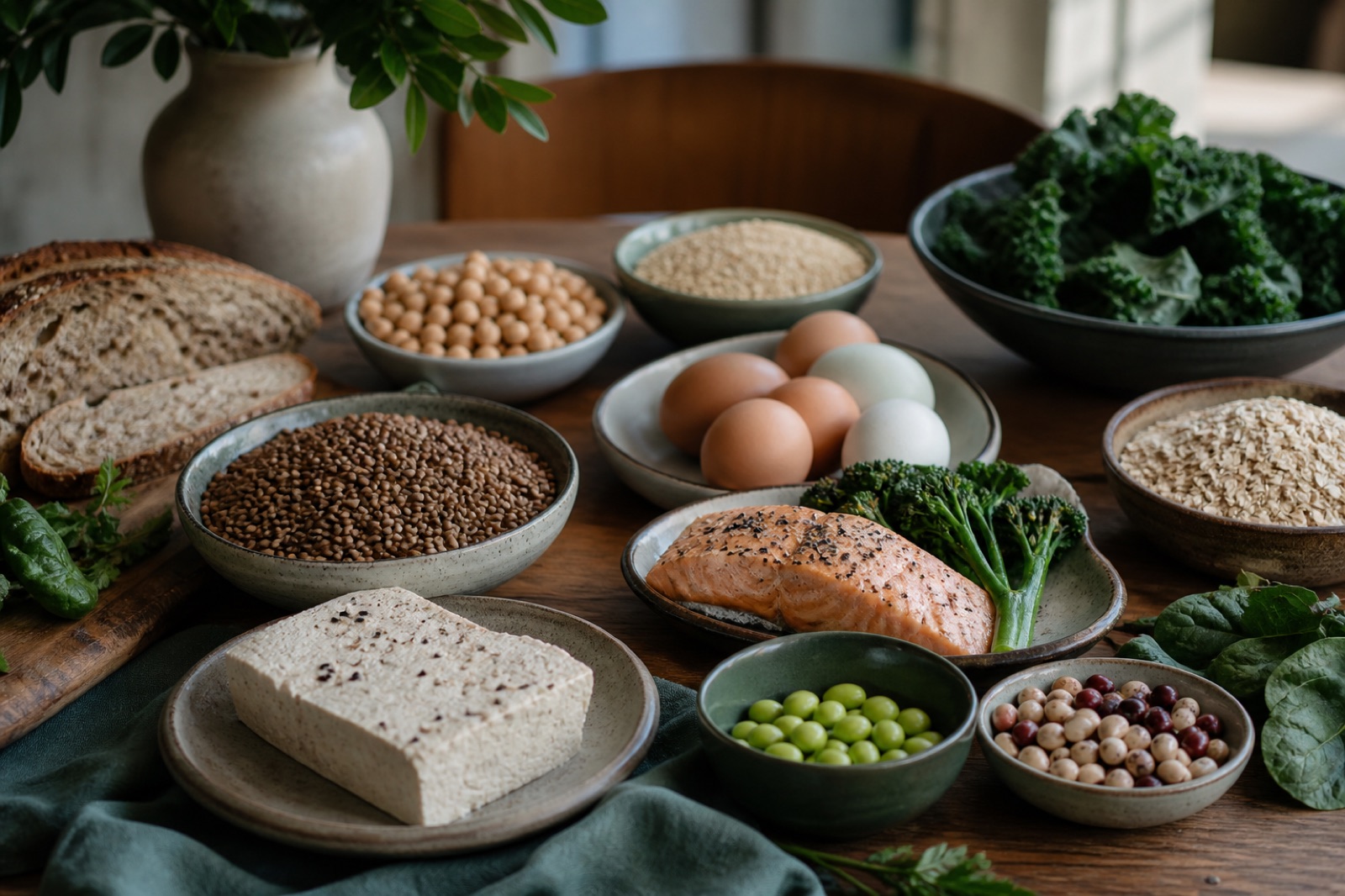
Protein has become the nutrient people feel they must optimize. The numbers can be useful, but they can also create false precision. A target only makes sense alongside body size, age, training, appetite, total calories, and health history.
I also care about what comes with the protein. Lentils bring fiber. Fish may bring omega-3 fats. Processed meats can bring substantial sodium. Looking only at grams misses much of the meal.
What the RDA actually means
For healthy adults, 0.8 grams per kilogram per day is intended to cover nearly everyone’s basic requirement. It was not designed as the perfect target for every athlete or older adult. I see it as the beginning of the conversation, not the answer stamped at the bottom.
Protein never arrives alone
A cup of lentils and a piece of meat both provide protein, but that is where the similarity ends. Foods bring fiber, fats, minerals, sodium, calories, and environmental tradeoffs along with their amino acids. The source matters because we eat food, not isolated numbers.
There is a point where more stops helping
Some people do benefit from more protein, particularly with hard training, low calorie intake, or the challenge of preserving muscle with age. But pushing the number ever higher can squeeze out beans, grains, fruit, and other fiber-rich foods. Kidney disease, pregnancy, frailty, or major performance goals deserve a more individualized discussion.
Questions readers often ask
How do I calculate the protein RDA?
Multiply body weight in kilograms by 0.8. A 70-kilogram adult has an RDA of 56 grams per day. This is a reference intake for healthy adults, not a universal performance target.
Do adults need more protein as they age?
Some older adults may benefit from intake above the RDA, especially when preserving muscle, recovering from illness, or strength training. Appetite, kidney health, and total diet should be considered.
Is plant protein as good as animal protein?
A varied plant-forward diet can provide all essential amino acids. Individual foods differ in amino-acid profile and digestibility, but eating a mix of legumes, soy foods, grains, nuts, and seeds across the day can meet needs.
Sources & further reading
National Academies Dietary Reference Intake tables ↗
Sung Won, MD
Physician by training and health educator focused on evidence-based longevity, plant-forward nutrition, and practical habits people can sustain.
Biography and credentials →