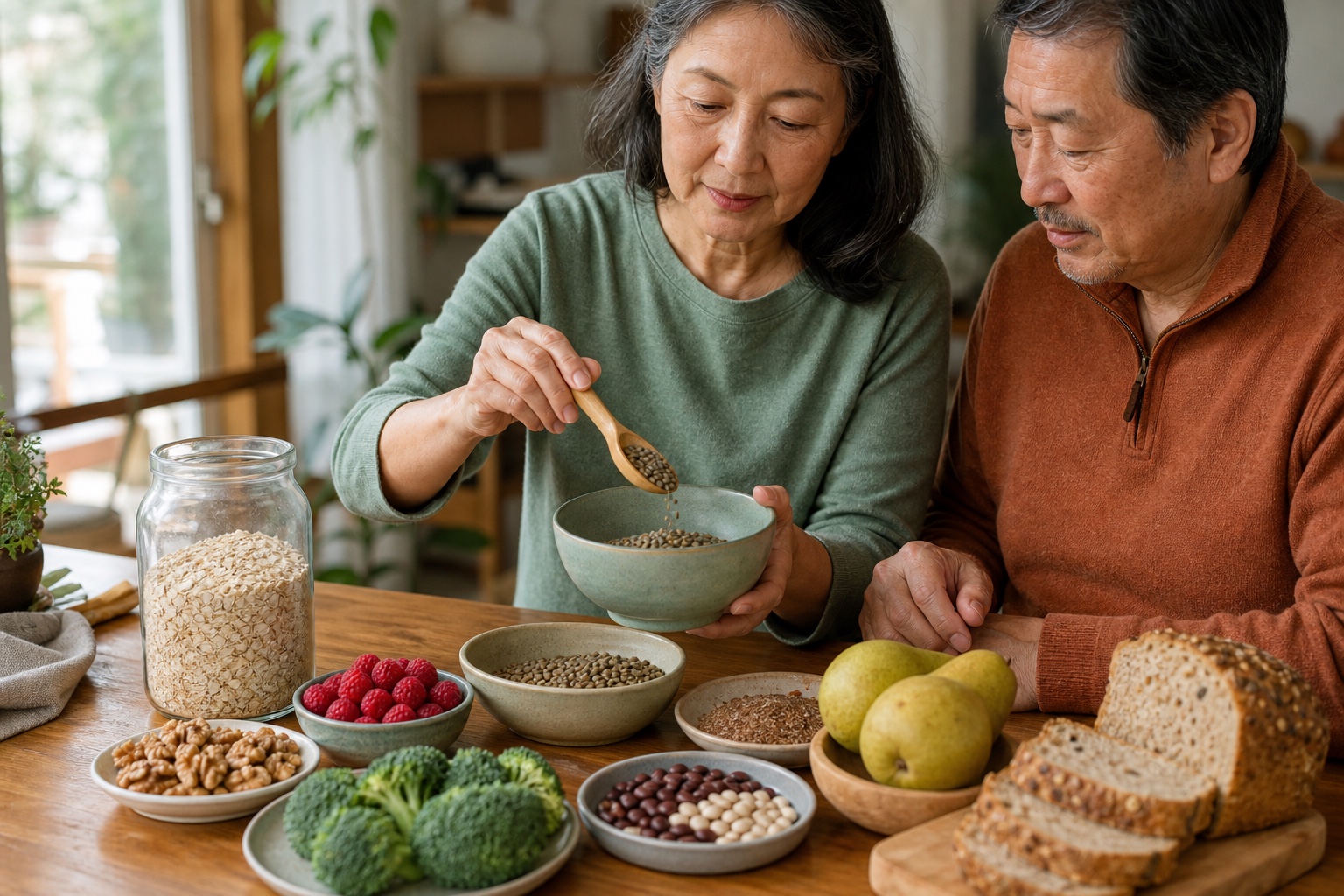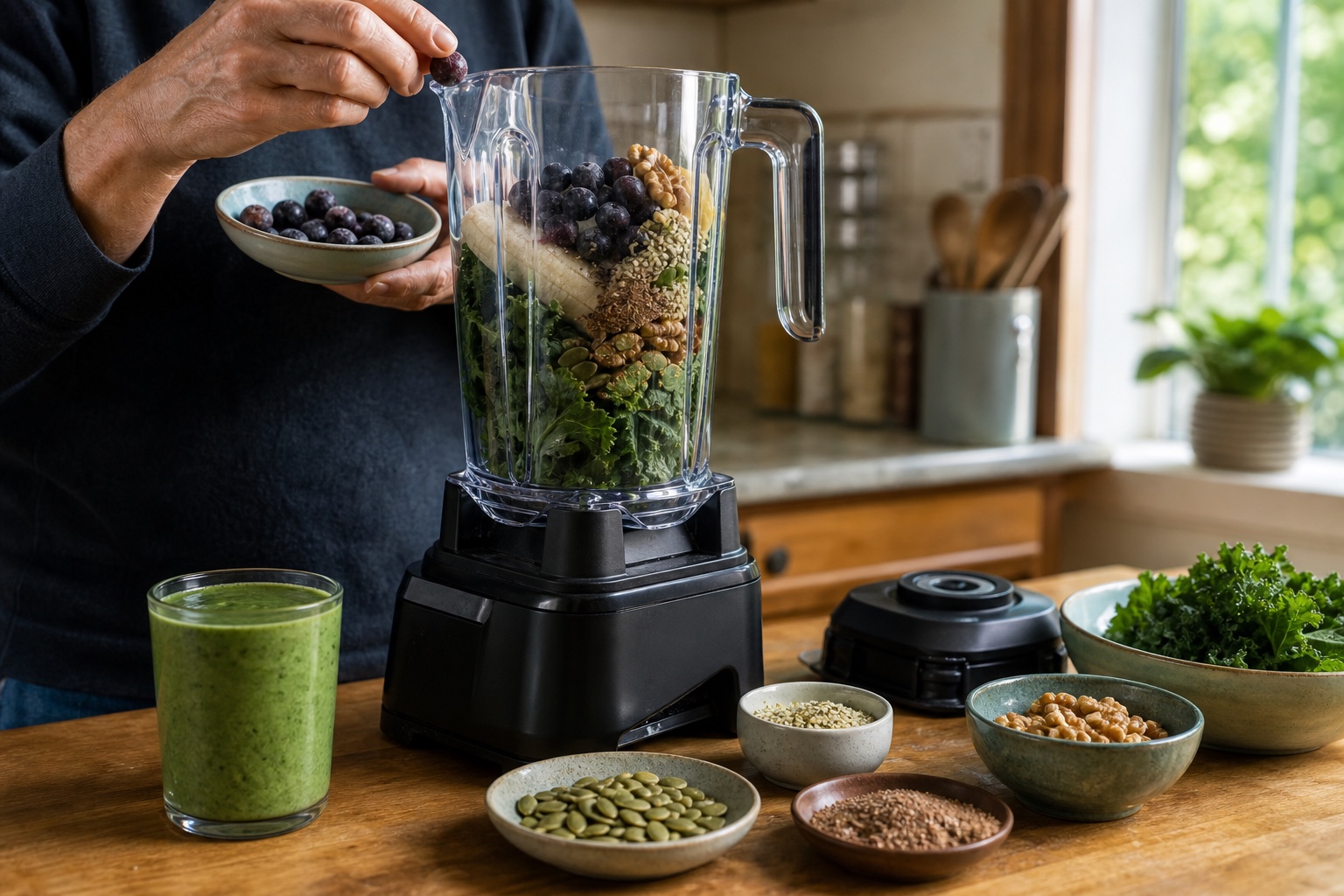
In a 60 ounce blender, pack roughly three quarters of the volume with leafy greens. Add 2 cups of frozen blueberries, other fruit to taste, half a cup of ground flaxseed, and up to half a cup total of mixed walnuts, pumpkin seeds, and hemp seeds. Add water to blend. Optional protein powder can make it a fuller meal. Divide the batch into three or four servings.
What matters most
Four things to remember
- 01
This is a convenient way to eat plants, not a cleanse, detox, or treatment.
- 02
A 60 ounce batch is several servings. Portion size still matters.
- 03
Ground flax and mixed nuts or seeds add fiber, fat, and calories. Adjust them to your energy needs and gut tolerance.
- 04
Rotate greens and consider medication, kidney stone, and digestive issues before making a very concentrated daily smoothie.
01
The 60 ounce base recipe
I use a large Vitamix container and think in proportions rather than exact handfuls. The leafy greens take up most of the container before blending. Frozen blueberries provide flavor, color, and a reliable fruit base. Ground flax and mixed nuts or seeds make the drink more substantial.
This amount is intended as a batch, not one sitting. Begin with a smaller serving if your current diet is low in fiber.
- Dark leafy greens to fill about 75 percent of the container before blending. Kale, collards, bok choy, romaine, and smaller amounts of spinach can be rotated.
- 2 cups frozen blueberries.
- Other whole fruit to taste, such as banana, mango, cherries, pear, or citrus.
- Half a cup of ground flaxseed.
- Up to half a cup total of mixed walnuts, pumpkin seeds, and hemp seeds.
- Water as needed for the texture you prefer.
- Optional plain protein powder when the smoothie is serving as a meal or your protein intake needs support.
02
How to blend it without fighting the machine
Add water first, then softer fruit, ground flax, nuts or seeds, frozen fruit, and greens. Start low and increase speed gradually. Use the tamper designed for your blender rather than a utensil. Add water in small amounts until the mixture circulates.
Divide the finished batch into three or four servings. Drink one with a meal, use it as a meal when it contains enough protein and energy, or refrigerate the remaining portions promptly. Fresh is best, but a tightly covered portion can usually be kept cold for the next day. Discard it if the smell, texture, or temperature suggests it was not stored safely.
03
What blending changes and what it does not
Blending keeps most of the fiber because the whole edible ingredients remain in the container. Juicing is different because much of the insoluble fiber is removed. The blender does break the food into smaller particles, which can make it easier and faster to consume.
That convenience cuts both ways. It helps someone who struggles to eat enough plants, but it also makes it easy to drink several servings of fruit, nuts, and seeds quickly. Small studies do not support the idea that every blended fruit meal causes a worse glucose response, but individual ingredients and portions still matter.
04
Why these ingredients belong together
Leafy greens provide folate, vitamin K, carotenoids, minerals, and fiber. Blueberries bring polyphenols and make the greens easier to enjoy. Flax contributes alpha linolenic acid and soluble and insoluble fiber. Walnuts, pumpkin seeds, and hemp seeds add unsaturated fat, minerals, texture, and some protein.
Plant based omega 3 from flax and walnuts is primarily ALA. The body converts only a small amount to EPA and DHA, so it should not be described as equivalent to a direct algae or fish source. Protein powder is also optional. Tofu, soy milk, or a meal eaten alongside the smoothie can serve the same purpose.
05
How to make it easier on the gut
A concentrated smoothie can deliver far more fiber than the gut is used to seeing. Start with 8 to 12 ounces, use less flax and fewer nuts or seeds, and increase over a few weeks. Sip rather than rushing. If the smoothie replaces a meal, chew something alongside it or slow down enough to notice fullness.
Rotate the plant ingredients instead of repeating a giant spinach smoothie every day. Variety broadens the diet and reduces the chance that one ingredient becomes excessive. People with a history of calcium oxalate kidney stones may need to limit high oxalate ingredients such as spinach and some nuts.
Put it into practice
Make the first batch manageable
- 01
Make half a batch the first time, especially if your current fiber intake is low.
- 02
Use two kinds of greens and one or two fruits rather than adding every healthy ingredient in the kitchen.
- 03
Grind whole flaxseed so its nutrients are more accessible.
- 04
Treat nuts, seeds, and protein powder as adjustable ingredients, not mandatory additions.
- 05
Portion the batch before drinking and notice how your appetite and digestion respond.
Safety first
When general advice is not enough
- Leafy greens are rich in vitamin K. People taking warfarin should keep vitamin K intake consistent and coordinate changes with their care team.
- A history of calcium oxalate stones may call for lower oxalate greens and individualized nutrition advice.
- Diabetes, delayed stomach emptying, inflammatory bowel disease, swallowing problems, and significant digestive symptoms can change which ingredients and texture are appropriate.
A few useful follow ups
Does blending destroy fiber?
No. Blending changes particle size but retains most fiber when the whole edible food stays in the drink. Juicing removes much more of the insoluble fiber.
Can I drink the full 60 ounce smoothie at once?
I would treat it as three or four servings. A full batch can be a very large load of fiber, calories, potassium, and natural sugar, especially when nuts, seeds, and protein powder are included.
Is this smoothie a gut health treatment?
No. It is a practical food format. It may help someone eat more plants and fiber, but it has not been proven to repair or reset an individual's microbiome.
Sources and further reading
Primary guidance and research reviewed for this article.
Small crossover trial of whole and blended fruit glycemic response ↗Randomized trial of smoothie form and satiety ↗NIH fact sheet on omega 3 fatty acids ↗NIH fact sheet on vitamin K ↗NIDDK nutrition guidance for kidney stones ↗
Sung Won, MD
Physician by training and health educator focused on evidence based longevity, plant forward nutrition, and habits people can sustain.
Read the full biography →