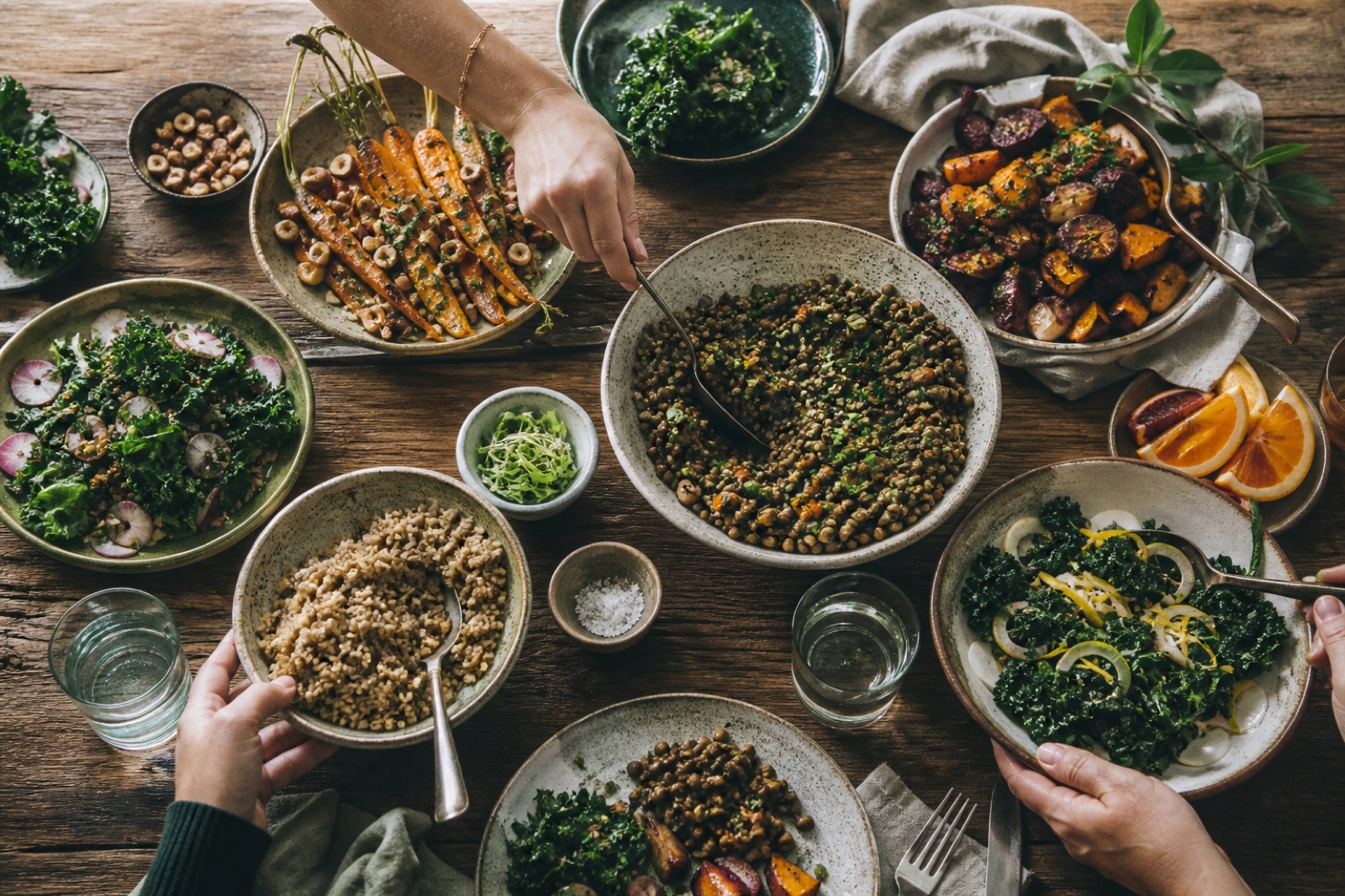
Plant forward means building most meals around minimally processed plant foods while leaving room for personal preference. It can be vegan, vegetarian, Mediterranean, or simply a pattern with more beans, vegetables, whole grains, fruit, nuts, and seeds. The quality of the foods and the pattern you can sustain matter more than the label.
What matters most
Four things to remember
- 01
Plant forward describes the center of the plate, not a rigid list of forbidden foods.
- 02
Whole and minimally processed plant foods offer more fiber and a wider mix of nutrients than refined plant products.
- 03
Protein still matters, especially after age 50 and when you are doing resistance training.
- 04
A useful first step is to improve one familiar meal instead of rebuilding your entire diet overnight.
01
Plant forward is a direction, not a diet tribe
The phrase plant forward can sound vague because it is intentionally flexible. It means plants have the leading role in the meal. Vegetables, beans, lentils, whole grains, fruit, nuts, and seeds are not decorations placed beside the main food. They become the foundation.
That is different from saying everyone must be vegan. Some people include fish, yogurt, eggs, or smaller portions of meat. Others eat entirely from plants. Both can fit the description when minimally processed plant foods make up most of the pattern.
02
The word plant does not automatically mean healthy
French fries, sweetened drinks, refined snacks, and many desserts can be made entirely from plants. The label tells you almost nothing about fiber, sodium, added sugar, protein, or how filling the food will be.
The strongest healthy aging research points toward patterns rich in vegetables, fruit, whole grains, legumes, nuts, seeds, and unsaturated fats. It also points away from diets dominated by highly processed food, added sugar, and processed meat. The pattern matters more than whether one ingredient can claim a plant origin.
03
A simple way to build the plate
Start with vegetables and fruit, then add a substantial protein source, a high fiber carbohydrate, and a source of unsaturated fat. This is a framework rather than a rule, so the proportions can change with appetite, training, culture, and health needs.
- Plants with color: leafy greens, broccoli, peppers, tomatoes, mushrooms, berries, or seasonal fruit.
- Protein: beans, lentils, tofu, tempeh, edamame, or another source that fits your eating pattern.
- High fiber carbohydrate: oats, barley, brown rice, quinoa, potatoes with the skin, or intact whole grain bread.
- Healthy fat and texture: walnuts, pumpkin seeds, hemp seeds, ground flax, avocado, or olive oil.
04
Do not let protein disappear
A bowl of vegetables is nutritious, but it may not be a complete meal. People over 50 who train regularly need enough total protein and enough protein at individual meals to support muscle repair. Beans, soy foods, lentils, peas, nuts, seeds, and selected protein powders can all help, but portions matter.
You do not need to turn every meal into a protein contest. Set a daily target that matches your body size and training, distribute it through the day, and then look at the whole food package. Our protein guide explains the 1.4 to 1.6 grams per kilogram range we use for active adults after 50.
05
Increase fiber at a pace your gut can handle
A plant forward pattern often raises fiber quickly. That is usually useful, but doubling your bean, whole grain, and raw vegetable intake in one weekend can create bloating, discomfort, or constipation.
Add one dependable food at a time. A half cup of beans, a serving of berries, or a spoonful of ground flax is enough for a first change. Keep it steady for several days, pay attention to symptoms, and then add the next food. Variety can grow over weeks rather than hours.
06
What this looks like in ordinary life
Breakfast might be oatmeal with blueberries, walnuts, ground flax, and soy milk. Lunch could be a lentil soup with whole grain bread and a large salad. Dinner might be tofu, vegetables, and brown rice with a sesame dressing. None of those meals requires a rare ingredient or a complicated supplement stack.
You can also change meals you already enjoy. Add beans and vegetables to a taco filling. Replace part of the meat in a pasta sauce with lentils and mushrooms. Put a larger portion of roasted vegetables beside a smaller portion of fish. Familiar food is often the easiest place to begin.
Put it into practice
Try one plant forward week
- 01
Choose one meal you already eat at least three times a week.
- 02
Add one vegetable or fruit and one reliable plant protein to that meal.
- 03
Choose an intact whole grain or another high fiber carbohydrate when it fits.
- 04
Repeat the meal long enough to decide whether it is satisfying and practical.
- 05
Make one adjustment for flavor, preparation time, or digestion before adding another new meal.
- 06
At the end of the week, keep the change that felt easiest to repeat.
Safety first
When general advice is not enough
- A fully plant based diet requires reliable vitamin B12 from fortified foods or a supplement. Depending on the pattern, vitamin D, iodine, calcium, iron, zinc, and omega 3 intake may also deserve attention.
- Kidney disease, digestive disease, food allergies, diabetes medication, and a history of disordered eating can change the safest plan. General food advice is not a substitute for individualized care.
- Increase fiber gradually if your current intake is low. Severe or persistent digestive symptoms should be evaluated rather than pushed through.
A few useful follow ups
Is plant forward the same as vegan?
No. Vegan describes a pattern that excludes animal products. Plant forward describes which foods lead the pattern and can include modest amounts of animal foods.
Can I get enough protein from a plant forward diet?
Yes, but it deserves planning. Beans, lentils, tofu, tempeh, edamame, peas, nuts, seeds, whole grains, and selected protein powders can contribute. Total intake and portion size matter, especially for active adults after 50.
What is the easiest way to start plant forward eating?
Improve one meal you already know. Add a vegetable, choose a dependable plant protein, and use a higher fiber carbohydrate. Repeat that meal before changing the rest of your week.
Is a plant forward diet good for healthy aging?
Long term observational research associates several diets rich in healthy plant foods with better physical, cognitive, and mental health in later life. That evidence supports the overall pattern, but it does not prove that one food or label guarantees a longer life.
Related reading
Build the full picture
Sources and further reading
Primary guidance and research reviewed for this article.
American Heart Association: benefits of plant forward eating ↗Nature Medicine study of dietary patterns and healthy aging ↗National Institutes of Health summary of midlife eating patterns and later health ↗Review of healthy diets for older adults ↗
Sung Won, MD
Physician by training and health educator focused on evidence based longevity, plant forward nutrition, and habits people can sustain.
Read the full biography →