Feed the ecosystem
The microbiome is fascinating, but it is not a dashboard we know how to optimize. For now, varied plants and enough fiber remain the most practical place to begin.
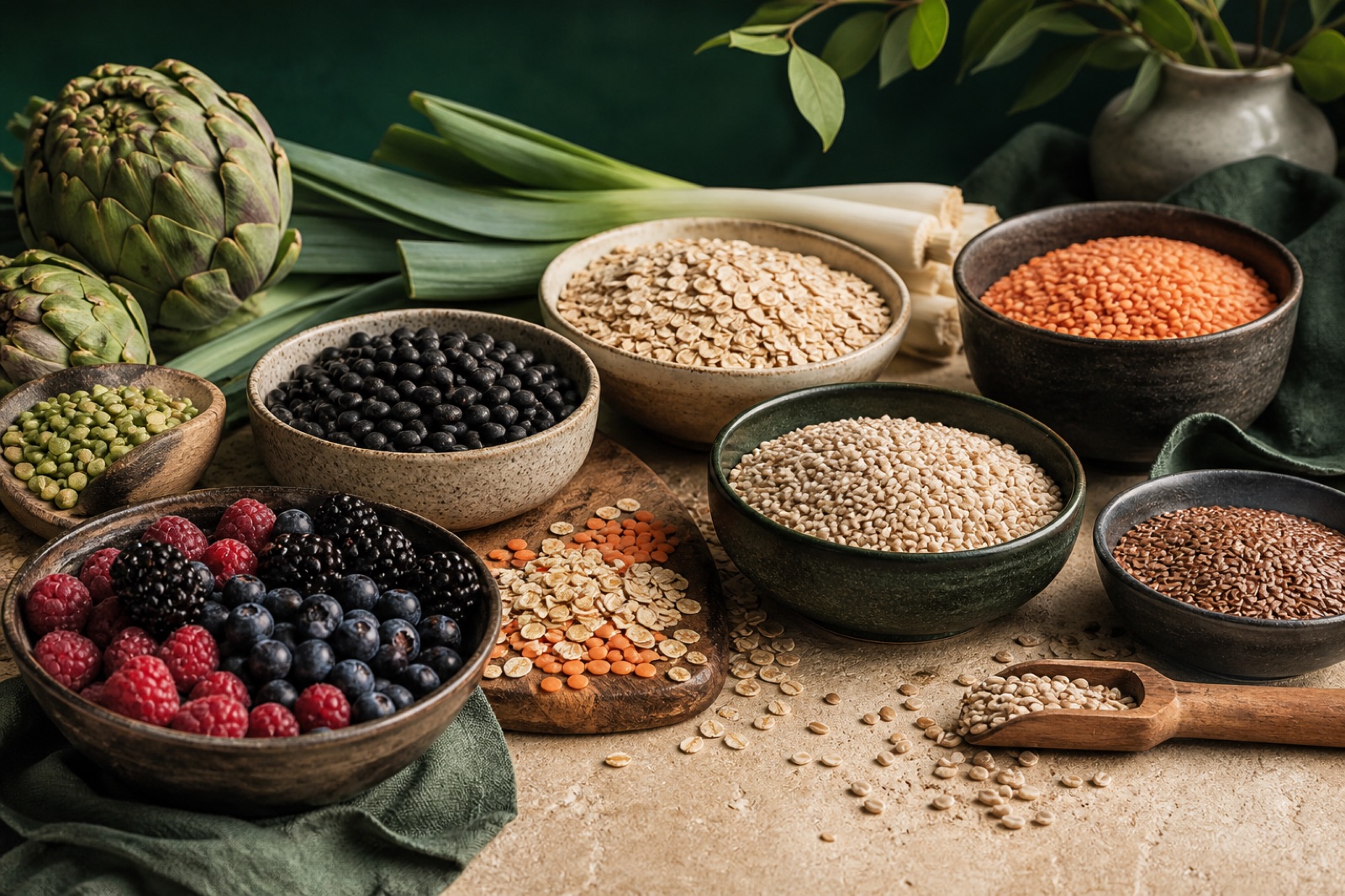
The gut microbiome is a living community, not a score. We know enough to say that diet matters, but not enough to prescribe a perfect microbial composition for every person.
That uncertainty does not leave us empty-handed. A varied, fiber-rich food pattern supports bowel function and cardiometabolic health while giving gut microbes a wider range of substrates. It is a practical move even when the microbiome remains difficult to measure.
Fiber is not one ingredient
Oats, lentils, berries, broccoli, nuts, and seeds do not behave identically in the gut. That is a reason to eat a variety, not a reason to micromanage each type. A broad mix gives gut microbes different substrates while supporting regularity, cholesterol, and glucose control.
A smoothie is a format, not a cure
I have used plant-rich smoothies because they make it easier for me to eat more whole plants while working on my own gut health. Blending usually keeps the fiber that juicing removes, but ingredients and portions still matter. So does tolerance. My personal experience is not proof that a smoothie routine can rebuild a microbiome or treat autoimmune or gastrointestinal disease.
Give your gut time to adjust
Going from very little fiber to a large daily dose can be miserable. Increase it over days or weeks, drink enough fluid, and pay attention to how you feel. If you have active gastrointestinal disease, a narrowing of the bowel, or persistent symptoms, generic advice may not be appropriate.
Be skeptical of precision we have not earned
Microbiome reports can look remarkably specific. The problem is that a detailed result does not automatically lead to a validated diet. At this point, symptoms, medical history, overall food pattern, and established clinical evaluation usually give us more to act on than a single commercial stool test.
Questions readers often ask
How much fiber should adults eat?
A common benchmark is about 25 grams per day for women and 38 grams for men ages 19–50, with lower reference amounts after age 50. Individual tolerance and medical conditions matter.
What foods are best for gut health?
There is no single best food. Legumes, vegetables, fruit, whole grains, nuts, seeds, and fermented foods can contribute in different ways. Variety and consistency are more useful than chasing one superfood.
Why does fiber cause bloating?
Gut microbes ferment some fibers and produce gas. A sudden increase can be uncomfortable. Increase fiber gradually, spread it across meals, drink enough fluid, and adjust the amount to tolerance.
Sources & further reading
NIH MedlinePlus high-fiber foods ↗Systematic review of fiber interventions and gut microbiota ↗Small crossover study: whole versus blended fruit ↗
Sung Won, MD
Physician by training and health educator focused on evidence-based longevity, plant-forward nutrition, and practical habits people can sustain.
Biography and credentials →