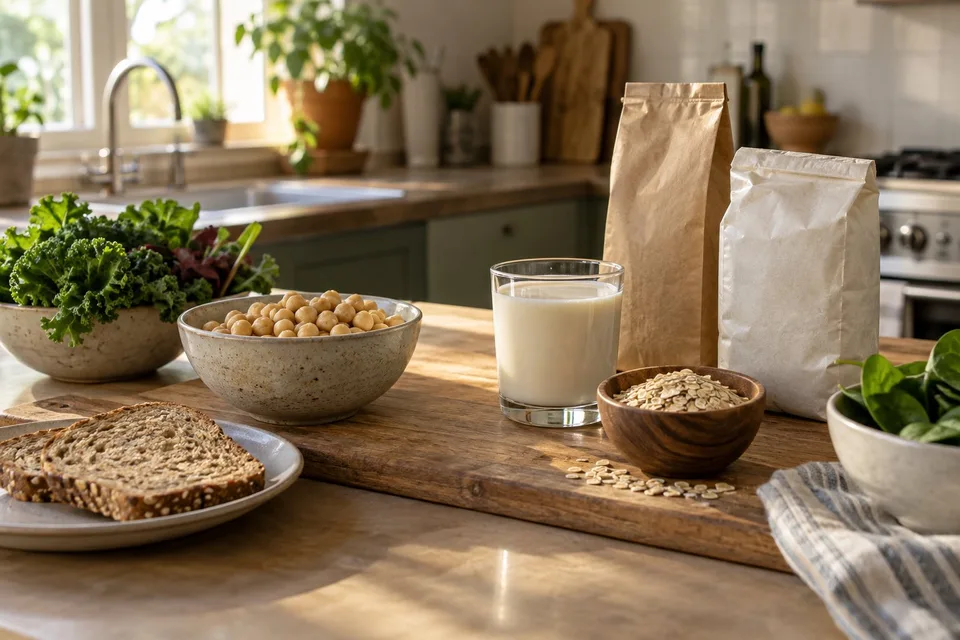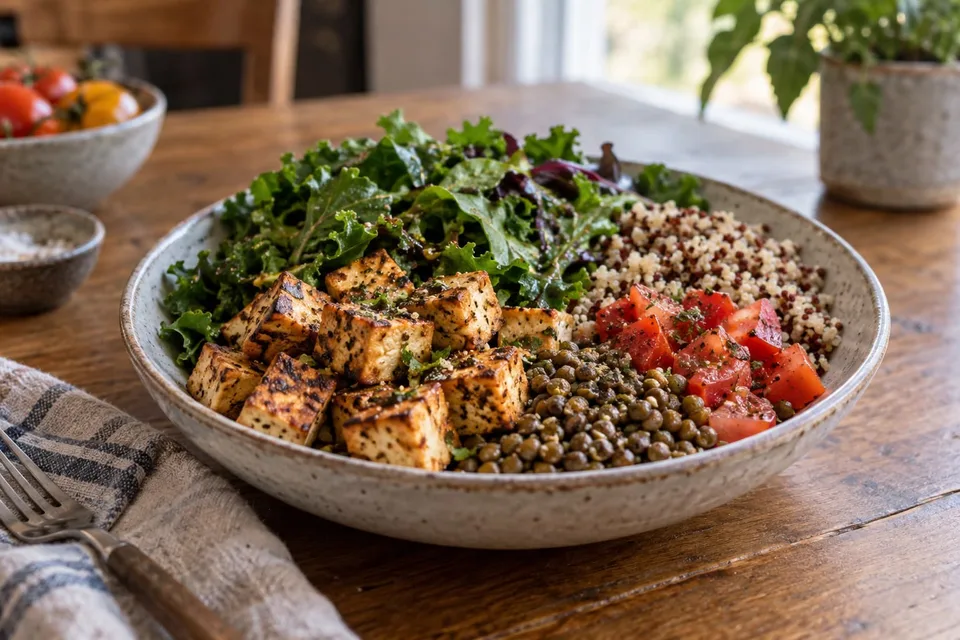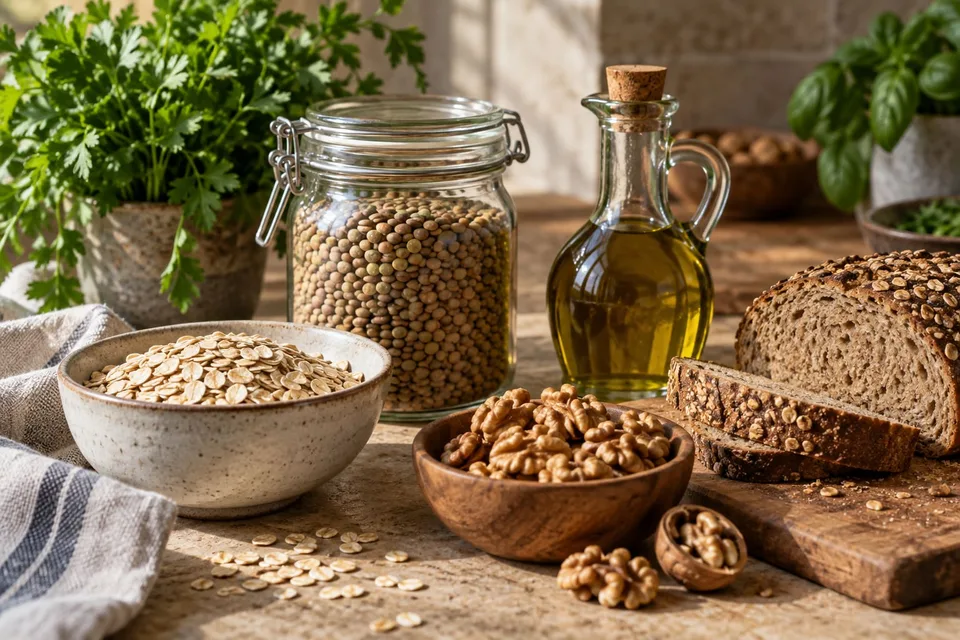
Replace recurring sources of saturated fat with unsaturated oils, nuts, and substantial plant-protein foods, and make beans and fiber-rich grains regular meal ingredients. Start with two swaps you can repeat. Keep prescribed treatment and judge the response with a follow-up lipid panel, not the word plant-based on a package.
What matters most
Four things to remember
- 01
Replacing a food matters more than simply adding a healthy extra.
- 02
Coconut oil is plant-derived but is not the default oil for lowering LDL.
- 03
Food-trial LDL changes are not guarantees for an individual or proof of fewer heart attacks in that trial.
- 04
Diet supports risk-based medical care; it does not authorize stopping medication.
01
Five swaps worth putting on the shopping list
The American Heart Association's 2026 dietary statement emphasizes a dietary pattern rich in plant foods and replacing saturated fats with unsaturated fats. Turn that direction into specific substitutions instead of treating every food labeled vegan as equally useful.
- Butter or coconut oil used routinely in cooking: choose olive or canola oil instead.
- Meat-centered chili or tacos: use beans or lentils as the main filling, with vegetables and familiar seasonings.
- A cheese-heavy snack: try a portion of unsalted nuts with fruit.
- A refined-grain breakfast: choose oats or barley with fruit and nuts; avoid turning the replacement into a sugary dessert.
- Coconut-based spreads or desserts: compare saturated fat and choose a lower-saturated-fat alternative that you enjoy.
American Heart Association: 2026 dietary guidance scientific statement
02
Beans have a practical randomized trial behind them
A 2024 trial randomized 180 adults with mildly elevated cholesterol to foods containing beans, peas, or rice. The pulse portions were 120 grams cooked, five days per week, for six weeks. Beans lowered LDL relative to rice by about 0.21 mmol/L, approximately 8 mg/dL; the 95% confidence interval was −0.39 to −0.03 mmol/L. Peas did not differ significantly from rice.
This is a reason to give beans a regular place in meals, not a promise of an 8-point drop for everyone. The study excluded lipid-lowering medication users and vegans. It measured blood lipids, not heart attacks. Data collection occurred in 2013–2015 and publication in 2024; it is not a new 2026 experiment. The trial also does not establish identical effects for every legume or every substitution.
03
A whole pattern can do more than one isolated ingredient
In a 2011 randomized trial, a combined Portfolio dietary pattern produced roughly 13–14% LDL reductions over six months, compared with about 3% with control dietary advice. The pattern combined plant sterols, viscous fiber, soy protein, and nuts. It was not simply an instruction to eat extra vegetables.
Do not assign that percentage to a handful of nuts or add expected effects from individual foods together. Adherence, starting diet, and baseline LDL affect results. The study received government and food-industry support, and authors disclosed industry relationships. Its results are useful context, not a guarantee or evidence that diet can replace a prescribed medicine.
04
Read the label that changes the decision
For this goal, compare saturated fat per portion you actually eat. A coconut-rich plant-based product can undermine the intended swap. Also compare sodium, added sugar, fiber, and protein where relevant; the front of the package is not the nutritional assessment.
Keep portions realistic. Oils and nuts are energy-dense, so use them in place of another fat or snack rather than automatically adding them on top of everything else. Beans can replace part or all of a meat filling; oats can replace the usual breakfast rather than becoming a second breakfast.
American Heart Association: 2026 dietary guidance scientific statement
05
Measure the response without making food a substitute for care
Choose two recurring meals, make the replacements consistent, and discuss when to recheck lipids with your clinician. Record the changes you actually sustained. LDL is useful, but cardiovascular decisions also depend on the overall risk picture and may include other measurements.
Some people need medication despite excellent habits, particularly with inherited high cholesterol or established cardiovascular disease. That is not a dietary failure. Keep prescribed treatment in place and discuss the next step when the follow-up result is available.
American Heart Association: 2026 dietary guidance scientific statement
Put it into practice
Your two-swap grocery checklist
- 01
Identify two foods you use often that are high in saturated fat.
- 02
Buy their replacements: an unsaturated cooking oil, beans or lentils, oats or barley, unsalted nuts, or tofu.
- 03
Compare labels using the portions you actually eat; include sodium and fiber in the decision.
- 04
Write down two meals where the new foods replace the old ones, and repeat them consistently.
- 05
Arrange an appropriate lipid follow-up with your clinician and review the result alongside your overall risk and treatment.
Safety first
When general advice is not enough
- Do not stop or delay prescribed cholesterol treatment because you have changed your diet.
- Known cardiovascular disease, very high LDL, or a family history of early cardiovascular disease merits clinical assessment rather than diet-only self-treatment.
- Adjust food choices for allergies, swallowing problems, kidney disease, or prescribed dietary restrictions; increase legumes and fiber gradually if needed.
A few useful follow ups
Is coconut oil a heart-healthy choice because it comes from a plant?
Plant origin does not make all fats interchangeable. For lowering LDL, favor unsaturated oils such as olive or canola over coconut oil.
How much will my LDL fall?
There is no reliable individual promise. Trial averages depend on the full intervention, starting diet, adherence, and participant characteristics. Check your own follow-up result.
Can I stop my statin if I eat more beans?
No. Continue prescribed treatment and discuss any changes with the prescribing clinician. Food changes and medication can work together.
Do I need expensive cholesterol-lowering foods?
Start with familiar foods such as beans, oats, tofu, nuts, and unsaturated oils. A branded product is not required to make useful substitutions.
Related reading
Build the full picture
Sources and further reading
Primary guidance and research reviewed for this article.
American Heart Association: 2026 dietary guidance scientific statement ↗Bell et al., 2024: beans, peas, and rice randomized trial ↗Jenkins et al., 2011: dietary Portfolio randomized trial ↗
Sung Won, MD
Physician by training and health educator focused on evidence based longevity, plant forward nutrition, and habits people can sustain.
Read the full biography →