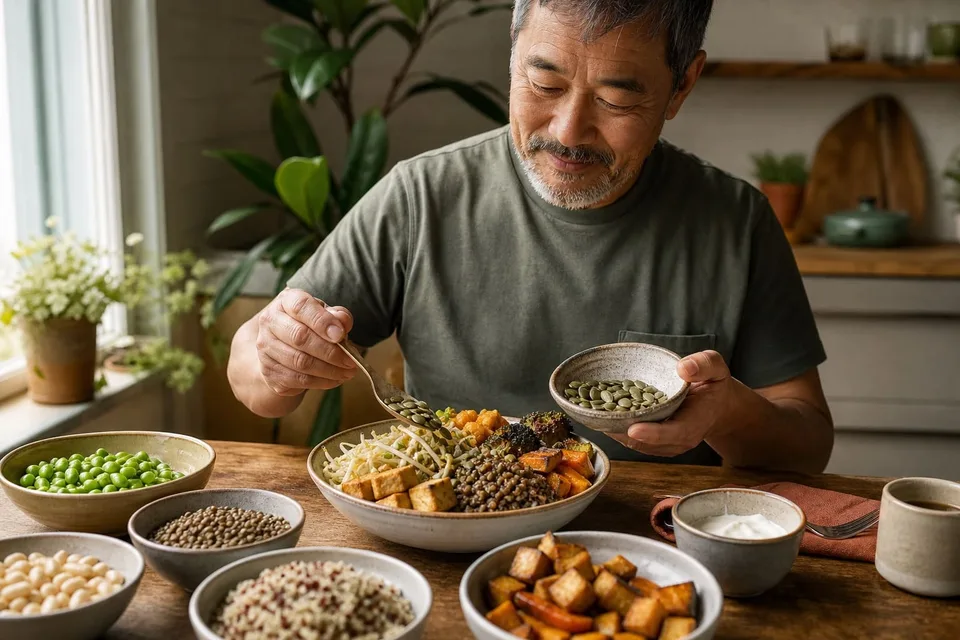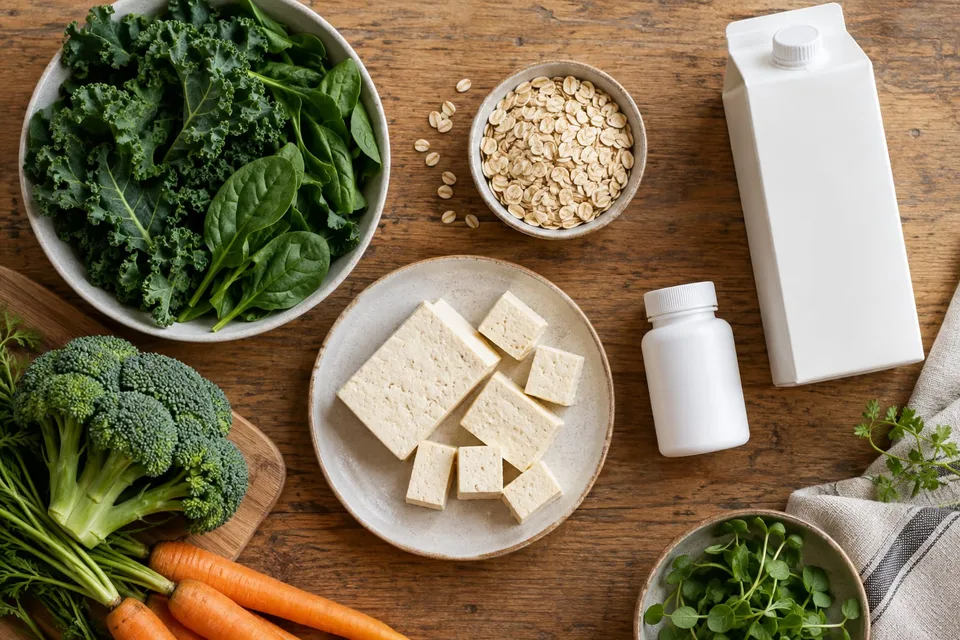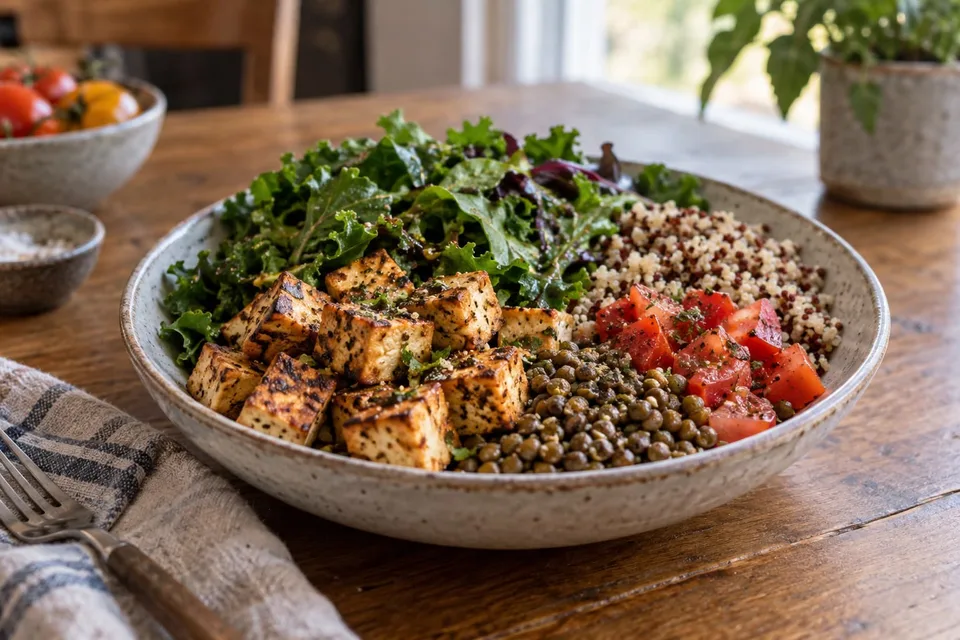
Build each meal around a substantial plant-protein source, then add vegetables, whole grains, and an unsaturated-fat source. Tofu, lentils, and green soybeans make a practical starting day. The examples below illustrate meal assembly, not a calorie prescription or a protein target that fits every body.
What matters most
Four things to remember
- 01
A scattering of nuts or a spoonful of hummus is not always a substantial protein portion.
- 02
Tofu, legumes, and soy foods can form the center of the meal rather than its side dish.
- 03
Generic nutrient estimates vary by product, portion, and preparation; read the package label.
- 04
Adequate energy, varied foods, a reliable B12 source, and strength training still matter.
01
Breakfast: a tofu scramble that carries the meal
Start with 150 grams of calcium-set firm tofu. Crumble it into a pan with tomatoes, spinach, and seasoning, and serve with whole-grain toast and fruit. The tofu alone supplies about 26 grams of protein in the USDA reference entry. Toast and vegetables contribute additional, variable amounts.
Firmness matters: a different tofu can contain substantially less protein or calcium. Compare its label rather than borrowing this estimate for silken tofu. If mornings are rushed, cook the scramble ahead and refrigerate promptly; use ordinary food-safety storage practices.
02
Lunch: make lentils the base, not the decoration
Use 1½ cups of cooked lentils in a bowl with your preferred whole grain, peppers, greens, and a lemon-and-olive-oil dressing. That lentil portion supplies about 27 grams of protein using the USDA reference for cooked, unsalted lentils. It is a generous serving, not a requirement.
If you are new to legumes, begin with a smaller portion and build gradually. Another option is a smaller lentil serving paired with tofu. Canned beans or lentils can save time; compare sodium, and drain and rinse when appropriate. A meal that your gut tolerates is more useful than a large portion you dread.
03
Dinner: a green-soybean bowl
Combine one cup of cooked, shelled green soybeans with brown rice, colorful vegetables, and a sesame-ginger dressing. The reference estimate for the beans is about 22 grams of protein. That means the edible beans, not a cup of pods; frozen edamame brands and portion weights vary.
Change the sauce, grain, and vegetables to keep the same framework interesting. Soy allergy calls for a different protein source, not persistence. A bean-and-lentil combination can work, with portions and protein recalculated from the foods you actually use.
04
How the estimates were calculated
The USDA SR28 entry for calcium-set firm tofu lists 17.27 grams of protein per 100 grams: 150 grams supplies 25.9 grams. Cooked unsalted lentils list 9.02 grams per 100 grams and 198 grams per cup: 1½ cups supplies 26.8 grams. The University of Rochester nutrient entry lists 22.23 grams per cup of cooked green soybeans. Values are rounded because everyday portions are not laboratory measurements.
Together, the three protein anchors provide about 75 grams, before the other ingredients. That sum is not a recommended daily target and the examples are not a complete energy or micronutrient plan. Adjust portions, snacks, and the rest of the diet to appetite, body size, activity, and clinical needs. The existing protein-after-50 article addresses target selection separately.
USDA SR28: legumes and legume products, nutrient reference · University of Rochester: cooked green soybeans, one cup
05
Plant protein can support training; meals still need planning
In a small 2021 study, 19 habitual vegans and 19 omnivores completed 12 weeks of supervised resistance training while consuming roughly 1.6 grams of protein per kilogram daily, using soy or whey supplementation. Researchers did not find significant differences in muscle or strength gains. These were young men, not a randomized assignment to lifelong diets, and the study did not test longevity. It supports feasibility rather than a universal prescription.
There is no need to make every meal a protein contest. Eat enough overall, include a variety of plants, and plan nutrients that deserve attention in a plant-only pattern. A reliable vitamin B12 source is essential; vegetables and unfortified fermented foods are not dependable substitutes. Use the site's B12 guide to understand the distinction between preventing a gap and treating a deficiency.
Hevia-Larraín et al., 2021: plant and mixed diets during resistance training · NIH Office of Dietary Supplements: vitamin B12
Put it into practice
A shopping and preparation checklist
- 01
Choose two protein anchors you enjoy: firm tofu, lentils, beans, tempeh, or shelled green soybeans.
- 02
Buy a whole grain, several vegetables, fruit, and an unsaturated-fat source to complete meals.
- 03
Check the protein per actual serving on packaged foods and verify fortification when relying on it.
- 04
Prepare one grain and one legume ahead, then vary sauces and vegetables through the week.
- 05
Adjust the amount to your needs; start smaller with legumes if a sudden fiber increase causes discomfort.
Safety first
When general advice is not enough
- Kidney disease, a prescribed protein restriction, frailty, unintentional weight loss, and complex nutrition needs call for individualized planning.
- Adapt for soy, sesame, nut, wheat, or other allergies; a substitution changes the nutrient estimate.
- Persistent digestive symptoms or unexplained weakness deserve clinical attention rather than simply adding more fiber or protein.
A few useful follow ups
Do I need protein powder to eat plant-forward?
Not automatically. Whole foods can provide substantial protein. A supplement is a convenience for some situations, not a required starting purchase.
Are these three meals enough protein for everyone?
No. The roughly 75 grams refers only to the example protein anchors. Individual requirements and the remainder of the diet differ.
Can I use canned lentils?
Yes. Compare sodium and serving size. Use the actual label to estimate protein rather than assuming every canned product matches cooked dry lentils.
Does all tofu provide 26 grams per serving?
No. The estimate applies to 150 grams of a specific calcium-set firm-tofu reference. Water content, brand, and serving size change the result.
Related reading
Build the full picture
Sources and further reading
Primary guidance and research reviewed for this article.
USDA SR28: legumes and legume products, nutrient reference ↗University of Rochester: cooked green soybeans, one cup ↗Hevia-Larraín et al., 2021: plant and mixed diets during resistance training ↗NIH Office of Dietary Supplements: vitamin B12 ↗
Sung Won, MD
Physician by training and health educator focused on evidence based longevity, plant forward nutrition, and habits people can sustain.
Read the full biography →