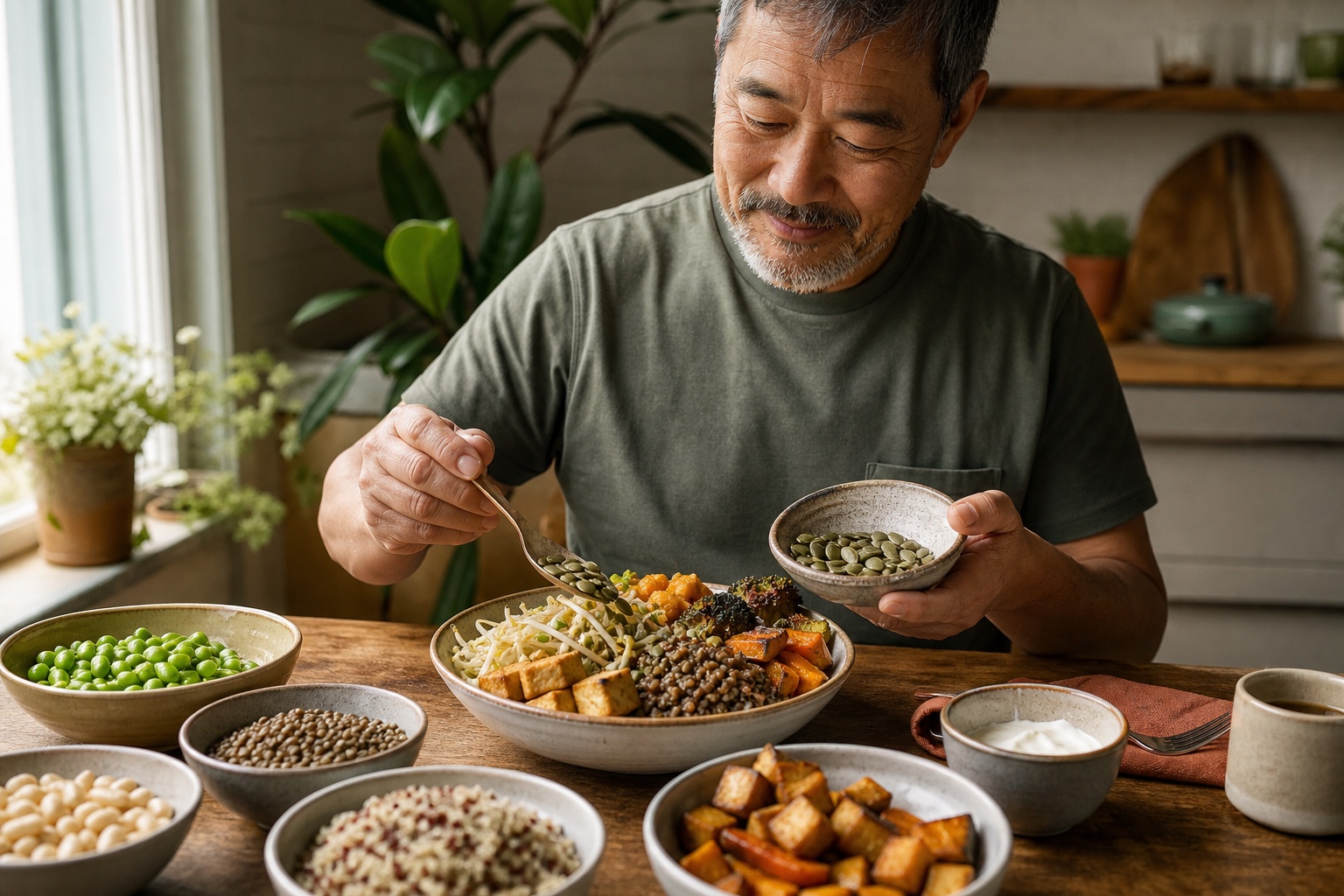
There is no medically proven perfect ramp. A practical approach is to add about 3 to 5 grams of fiber a day, hold that level for three to seven days, and increase again only if symptoms are manageable. People with a sensitive gut may need a slower pace.
What matters most
Four things to remember
- 01
The Daily Value on food labels is 28 grams, but life stage targets vary by age and sex.
- 02
After age 50, National Academies reference amounts are 30 grams daily for men and 21 grams for women.
- 03
Add one fiber rich serving at a time and give your gut several days to respond.
- 04
Variety matters because different fibers behave differently and feed different groups of microbes.
01
Why a fast increase can feel terrible
Gut microbes ferment many fibers and produce gases in the process. A sudden large increase gives them much more material before the digestive system has adapted. The result can be bloating, pressure, cramping, or a change in stool frequency.
That does not mean fiber is bad for you, and it does not mean every symptom should be pushed through. The type, amount, and speed all matter. A person moving from 10 grams to 30 grams overnight is running a very different experiment from someone adding a serving of lentils three times a week.
02
Know the destination before planning the pace
The Nutrition Facts Daily Value is 28 grams for a 2,000 calorie diet. National Academies reference amounts vary by age and sex. For adults over 50, the amounts are 30 grams a day for men and 21 grams for women. Younger adults have higher references because average calorie needs are higher.
Those are population reference values, not a requirement to hit the same number tomorrow. If you currently eat 12 grams, reaching 18 consistently is a meaningful first step. Learn your baseline from three ordinary days before deciding how large the gap really is.
03
A practical ramp that respects your gut
Formal guidelines advise increasing fiber gradually but do not specify one universal schedule. I use a practical experiment: add roughly 3 to 5 grams a day, stay there for three to seven days, then increase again if bowel movements and bloating remain manageable. This is a pacing tool, not a clinically proven formula.
Three to five grams can be one pear, a half cup of berries, a small serving of beans, or a modest portion of oats. Adding a food serving is usually easier than measuring isolated powder. Someone with irritable bowel symptoms may need to change one food at a time and hold each step longer.
- Days 1 through 4: add berries or a piece of fruit to one meal.
- Days 5 through 9: keep the fruit and add a small serving of oats or another whole grain.
- Days 10 through 14: add one quarter to one half cup of beans or lentils.
- Week 3: add nuts, seeds, or another vegetable serving if the earlier changes feel comfortable.
04
Water helps, but more water is not always the answer
Fiber holds water, and adequate fluid helps stool remain easier to pass. Drink regularly with meals and around activity, especially when adding bran, psyllium, or other fibers that absorb water. A dry supplement taken with too little fluid can make constipation worse.
Forcing a gallon is not necessary for most people. Fluid needs vary with body size, food, heat, activity, medication, and health. Heart failure and kidney disease can require specific fluid guidance. The goal is enough fluid for your circumstances, not a universal contest.
05
Build variety instead of chasing one super fiber
Beans, oats, barley, vegetables, fruit, nuts, seeds, and whole grains contain different mixtures of soluble, insoluble, viscous, and fermentable fiber. Their effects on stool, cholesterol, glucose, and gut microbes are not identical. That is useful. A varied diet gives the digestive system more than one tool.
Microbiome studies show that fiber interventions can shift certain organisms or metabolites, but individual response varies greatly. It is too early to promise that one food will create an ideal microbiome. Regularity, comfort, dietary quality, blood lipids, and glucose are more practical outcomes to watch.
06
When to slow down or get help
Reduce the latest increase if bloating becomes painful, bowel movements become difficult, or symptoms interfere with eating and daily activity. Return to the last comfortable level, then try a smaller change or a different food. Cooking vegetables, rinsing canned beans, and using smaller portions can improve tolerance.
Severe pain, vomiting, abdominal swelling, blood in the stool, fever, unexplained weight loss, or inability to pass stool or gas should not be treated as a normal fiber adjustment. Seek medical evaluation.
Put it into practice
A calm three week fiber reset
- 01
Estimate your current intake for three days using food labels or a reliable nutrition tracker.
- 02
Choose one food that adds about 3 to 5 grams of fiber and eat it consistently for several days.
- 03
Drink normally with meals and activity. Do not force excessive fluid.
- 04
Track comfort, stool frequency, and stool form, not only grams.
- 05
Add the next food only when the previous step feels manageable.
- 06
Aim for variety across the week rather than perfect numbers every day.
Safety first
When general advice is not enough
- A bowel narrowing, past obstruction, active inflammatory bowel disease flare, severe gastroparesis, or recent gastrointestinal surgery may require a different plan.
- Psyllium and other fiber supplements can affect medication absorption. Separate timing as directed by a clinician or pharmacist.
- Persistent or severe symptoms deserve evaluation rather than repeated attempts to push the fiber higher.
A few useful follow ups
How much fiber should I add each week?
A practical approach is 3 to 5 grams a day above your current baseline, held for several days before the next increase. There is no single proven schedule, so symptoms should guide the pace.
Why am I bloated after eating more fiber?
Many fibers are fermented by gut microbes, which produces gas. A sudden increase, large bean portions, certain carbohydrates, constipation, or an underlying digestive condition can all contribute.
Is a fiber supplement as good as food?
A supplement can be useful for a specific goal, and psyllium has evidence for constipation and cholesterol. Whole foods provide a wider mix of fibers, nutrients, and phytochemicals, so supplements are best viewed as a tool rather than a complete replacement.
Sources and further reading
Primary guidance and research reviewed for this article.
FDA guide to the Nutrition Facts label ↗National Academies dietary fiber reference tables ↗NIDDK guidance on fiber, constipation, and liquids ↗Systematic review of fiber interventions and gastrointestinal effects ↗Individual variation in microbiome response to fiber interventions ↗
Sung Won, MD
Physician by training and health educator focused on evidence based longevity, plant forward nutrition, and habits people can sustain.
Read the full biography →