Fermented foods can fit a healthy eating pattern, and a small human trial found changes in gut microbial diversity and inflammatory markers. That is promising, not proof of longer life or treatment for digestive disease. Fermented does not automatically mean probiotic, and more is not always better.
What matters most
Four things to remember
- 01
Fermentation describes how a food is made, not a guaranteed health effect.
- 02
Not every fermented food contains live microbes when you eat it.
- 03
Microbiome and blood-marker changes are not the same as fewer illnesses.
- 04
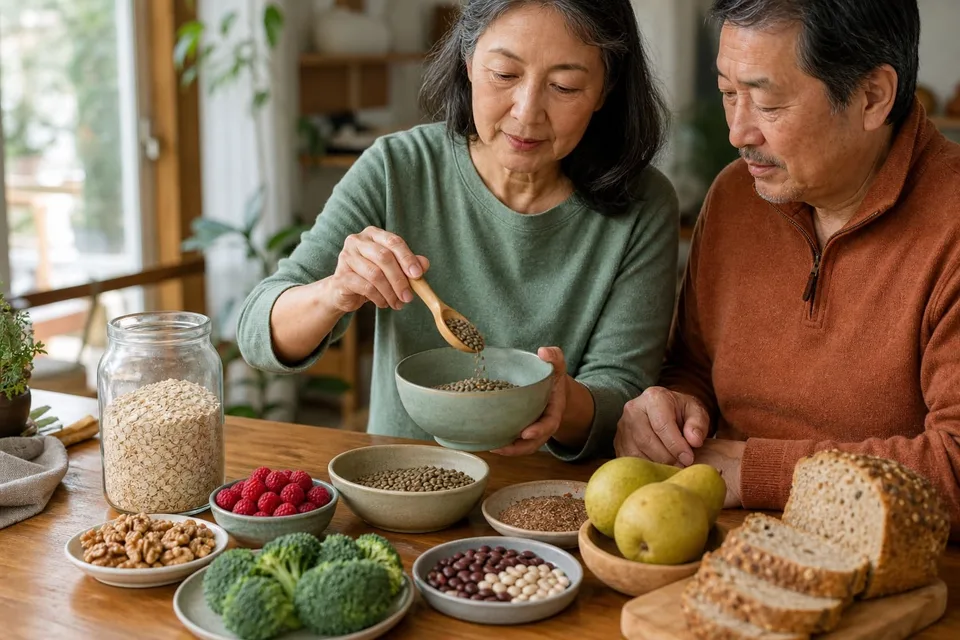
Keep fiber-rich plants in the picture rather than replacing them with ferments.
01
Three terms that deserve separate meanings
Fermented foods are made using the activity of microorganisms. Some still contain live cultures at the time of eating; cooking or processing can remove that feature. A probiotic is a more specific claim involving identified live microorganisms with evidence of a health benefit at an adequate amount. The ISAPP consensus statement explains why these categories should not be used interchangeably.
Tempeh, for example, remains a useful food even though it is normally cooked. A food does not become worthless when its microbes are no longer alive. Conversely, a sour taste or a jar in the refrigerated aisle does not establish a clinically tested probiotic effect.
02
The human trial is interesting, but small
Wastyk and colleagues studied high-fiber and high-fermented-food diets in healthy adults, with 18 participants in each arm and repeated microbiome and immune measurements. The fermented-food group showed increasing microbial diversity and reductions in inflammatory markers. The fiber group had different responses rather than the same pattern.
These measurements help researchers ask better questions. They do not show that fermented foods prevent dementia, cure irritable bowel syndrome, or extend lifespan. The intervention also involved a mixture of foods, so it cannot identify the effect of one spoonful of kimchi. The trial is not a reason to stop eating beans, whole grains, fruit, or vegetables.
03
Choose a food you would enjoy without a health promise
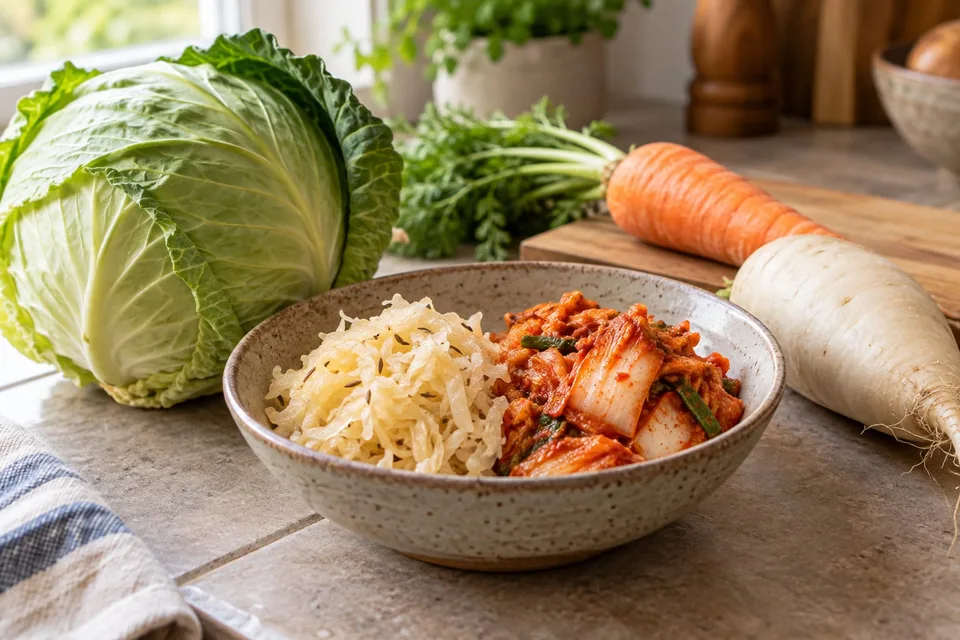
Start with a normal meal and ask whether a fermented food makes it more appealing. A little fermented cabbage might work beside a grain-and-bean bowl. Plain yogurt, including an appropriately fortified plant-based option, may fit another person's breakfast. Check ingredients and allergens rather than assuming different products are nutritionally equivalent.
Compare sodium when choosing salty vegetable ferments, and added sugar when choosing sweetened drinks or yogurt. Read storage instructions. Products marketed for gut health can still be costly or a poor fit for your needs; a simple food you enjoy is enough.
04
Let comfort and food safety set the pace
There is no universal fermented-food serving target established for every adult. If you want to experiment, try a small amount with a familiar meal, keep the rest of the meal pattern steady, and note whether you actually enjoy and tolerate it. You do not need to push through pain or buy a microbiome test to justify the experiment.
Use foods prepared and stored safely. Fermentation is not a guarantee against contamination, and raw milk is not required for a live-culture food. FDA guidance warns that unpasteurized milk can carry serious pathogens. People with higher infection risk should discuss suitable foods with their clinical team rather than follow an online fermentation challenge.
Put it into practice
A low-pressure way to try fermented foods
- 01
Choose one food you enjoy and can afford.
- 02
Check sodium, added sugar, allergens, and storage instructions.
- 03
Try a modest amount alongside a familiar meal rather than replacing the meal.
- 04
Keep eating varied fiber-rich plants.
- 05
Stop the experiment and seek advice if symptoms are significant or persistent.
Safety first
When general advice is not enough
- Seek individualized advice if you are immunocompromised, pregnant, have food allergies, or follow a prescribed sodium restriction.
- Avoid raw-milk products; live cultures do not require starting with unpasteurized milk.
- Persistent pain, blood in stool, fever, unexplained weight loss, or dehydration deserve medical assessment, not a larger serving of ferments.
A few useful follow ups
Are fermented foods the same as probiotics?
No. Fermentation is a food-making process. A probiotic claim requires more specific evidence about the organisms, amount, and benefit.
Do I need fermented foods every day?
No universal daily target has been established. Consider enjoyment, tolerance, food safety, and the overall diet.
Should fermented foods replace fiber?
No. They answer different nutritional questions. A small microbiome trial does not justify abandoning varied fiber-rich foods.
Related reading
Build the full picture
Sources and further reading
Primary guidance and research reviewed for this article.
Wastyk et al., human dietary intervention and immune measurements ↗ISAPP consensus statement on fermented foods ↗FDA: raw milk questions and answers ↗
Sung Won, MD
Physician by training and health educator focused on evidence based longevity, plant forward nutrition, and habits people can sustain.
Read the full biography →