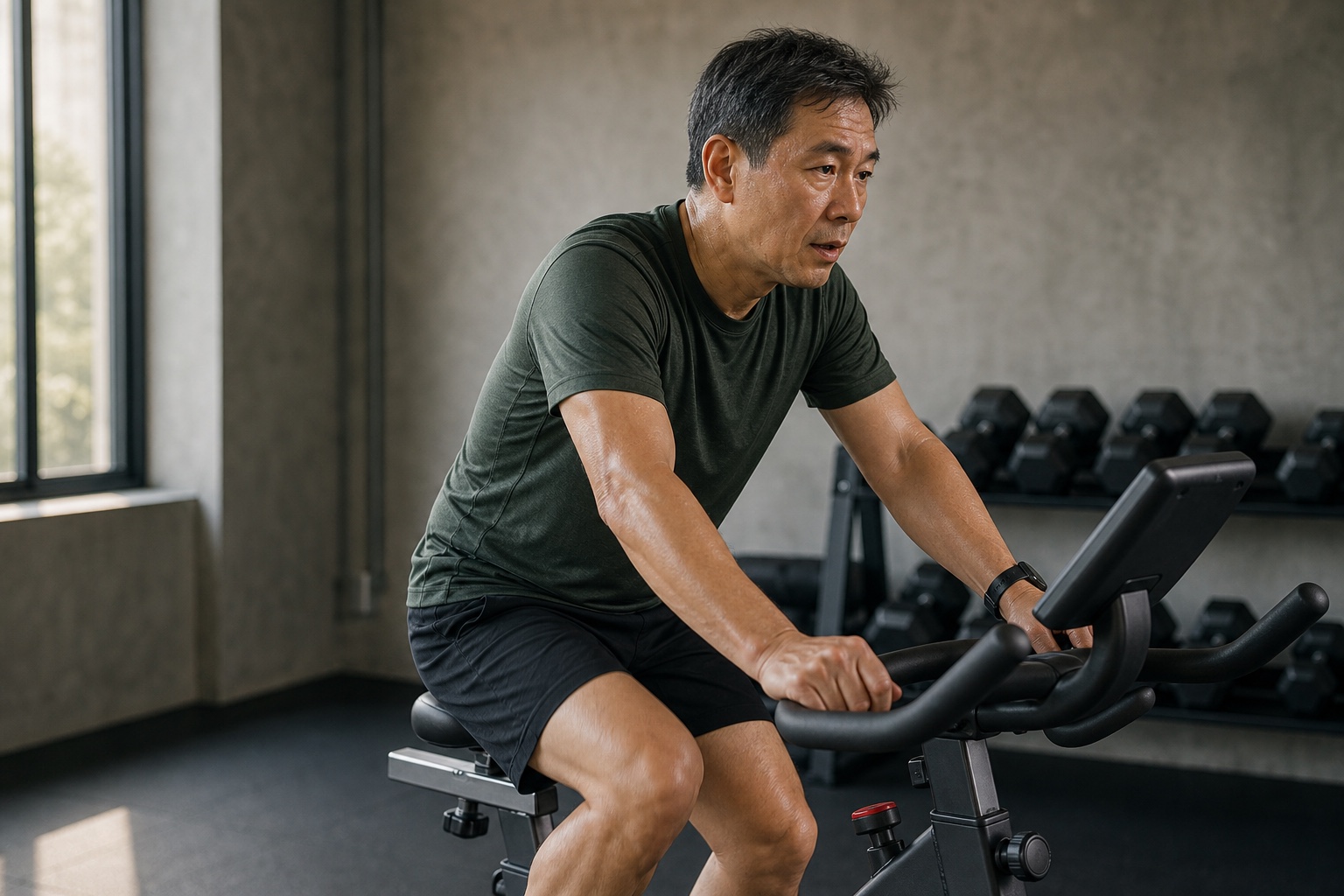
For a healthy adult over 50 who resistance trains, 1.4 to 1.6 grams of protein per kilogram per day, about 0.64 to 0.73 grams per pound per day, is a strong evidence-based target. Extra protein cannot substitute for resistance exercise.
What matters most
Four things to remember
- 01
The RDA of 0.8 g/kg is an adequacy reference. It was not designed to optimize training adaptation or muscle gain.
- 02
For adults over 50 who resistance train, 1.4 to 1.6 g/kg/day is a practical performance target. About 1.6 g/kg is where average muscle gain benefits level off in a major meta analysis.
- 03
The direct conversion is about 0.64 to 0.73 g/lb/day. Keeping both units visible makes the target easier to use.
- 04
Distributing roughly 0.4 g/kg across three or four meals can make the daily target easier to reach.
01
Why protein gets more attention with age
Muscle responds less strongly to the same meal as we get older. Appetite can shrink, illness can interrupt eating, and inactivity can accelerate muscle loss. Resistance training pushes in the other direction, but it also gives the body a stronger reason to use dietary protein.
Turning 50 is not a metabolic switch. It is a useful time to become more deliberate. If you are lifting regularly and want to preserve or build lean mass, the target should reflect that goal rather than the minimum intake for an average sedentary adult.
02
Set the target around your training
Convert pounds to kilograms by dividing by 2.2. For regular resistance training, multiply that number by 1.4 and 1.6. Someone who weighs 176 pounds is about 80 kilograms, which produces a daily target of roughly 112 to 128 grams.
A large meta analysis found that the average added benefit for fat-free mass during resistance training leveled off around 1.6 grams per kilogram per day. That supports using 1.4 to 1.6 grams per kilogram, or about 0.64 to 0.73 grams per pound, as a practical target rather than continually moving the number higher.
- 150 pounds is about 68 kilograms: roughly 95 to 109 grams at 1.4 to 1.6 g/kg.
- 176 pounds is about 80 kilograms: roughly 112 to 128 grams.
- 200 pounds is about 91 kilograms: roughly 127 to 145 grams.
- To calculate the range in pounds, multiply body weight by 0.64 and 0.73.
03
More protein is not the same as more muscle
Protein supplies building material. Resistance training supplies the signal to build and keep muscle. When researchers look at protein supplementation without training, the added benefit for strength and lean mass is often small or absent. When protein is paired with resistance exercise, the case becomes more convincing, especially in people who are frail, have low intake, or are at risk of sarcopenia.
That is the part protein marketing tends to leave out. A sedentary person may need to correct a low intake, but continuing to push protein higher does not reproduce the benefits of lifting, carrying, climbing, and practicing balance. The practical sequence is adequate food, regular resistance work, and then fine tuning.
04
Spread it across the day
Many people eat very little protein at breakfast, a modest amount at lunch, and most of it at dinner. A more even pattern gives the body several opportunities to respond. A useful performance target is about 0.4 grams per kilogram at each of three or four meals. For an 80 kilogram person, that is about 32 grams per meal.
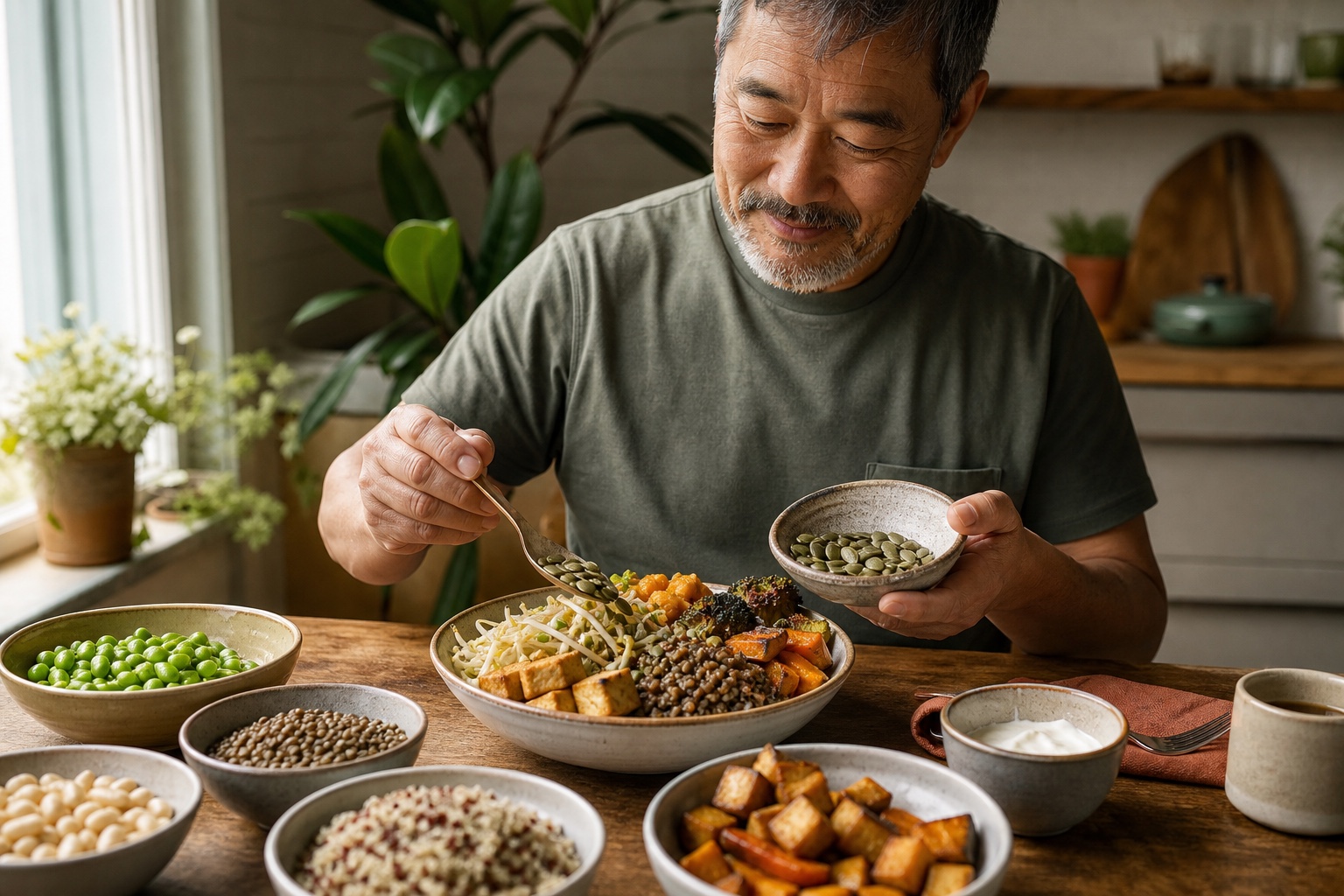
You do not have to count forever. Count for a few ordinary days, learn what your usual portions provide, then return to eating food. A cup of cooked lentils has about 18 grams. Tofu, tempeh, edamame, beans, Greek style yogurt, eggs, fish, and poultry can all contribute. Whole grains, nuts, and seeds add smaller amounts that still count.
05
Choose protein that improves the rest of the meal
I prefer a plant forward approach because protein never arrives alone. Lentils bring fiber and potassium. Soy foods can provide a complete protein with relatively little saturated fat. Nuts and seeds bring unsaturated fats, though they are calorie dense. Fish can add EPA and DHA. Processed meats can bring substantial sodium and saturated fat.
Protein powder is a convenience, not a requirement. It can help when appetite is low, breakfast is rushed, or a training schedule makes food difficult. Look for a short ingredient list and independent quality testing. It should solve a practical problem, not displace most of the plants on the plate.
Put it into practice
A simple way to begin this week
- 01
Calculate your resistance training target using 1.4 to 1.6 grams per kilogram per day.
- 02
Use the upper end of the range when training volume is high or preserving muscle is the priority.
- 03
Track three ordinary days, including one weekend day. Compare your actual intake with the target.
- 04
Add one useful source to the weakest meal. Try tofu, beans, lentils, edamame, yogurt, eggs, or another food that fits your pattern.
- 05
Distribute about 0.4 grams per kilogram across three or four meals instead of concentrating nearly everything at dinner.
- 06
Reassess after several weeks using strength, energy, appetite, and consistency, not only the protein total.
Safety first
When general advice is not enough
- Kidney disease, liver disease, pregnancy, frailty, poor appetite, and major weight loss call for individualized guidance.
- Protein above 1.6 grams per kilogram can be reasonable, but higher intake has not consistently produced more muscle growth for the average resistance trained adult.
- If swallowing, chewing, or appetite has become difficult, the priority may be making enough food easier to eat rather than pursuing a perfect macro target.
A few useful follow ups
Is 100 grams of protein a day enough after 50?
It depends on body size and training. For a 90 kilogram person, 100 grams is about 1.1 g/kg and falls below a 1.4 to 1.6 g/kg resistance training target of roughly 126 to 144 grams. For a 65 kilogram person, 100 grams is about 1.54 g/kg and fits well.
Do I need protein immediately after a workout?
There is no need to race to a shake. A protein containing meal within a few hours is reasonable. Total daily intake, training quality, and consistency matter more than a narrow anabolic window.
Can I get enough protein from plants?
Yes. Soy foods, lentils, beans, peas, nuts, seeds, and whole grains can meet protein needs when total food intake is adequate. Variety across the day makes the plan easier.
Sources and further reading
Primary guidance and research reviewed for this article.
ESPEN expert recommendations on protein intake in older people ↗ESPEN practical guideline on nutrition and hydration in geriatrics ↗Meta analysis and meta regression of protein supplementation during resistance training ↗International Society of Sports Nutrition position stand on protein and exercise ↗Protein supplementation with and without resistance training in older adults ↗Dose response relationship between protein intake, strength, and resistance training ↗National Academies protein reference intake ↗
Sung Won, MD
Physician by training and health educator focused on evidence based longevity, plant forward nutrition, and habits people can sustain.
Read the full biography →