What matters most
Four things to remember
- 01
After-meal movement can help with the glucose response to that meal.
- 02
Small trials and reviews support a benefit, but populations and methods differ.
- 03
There is no single proven minute to start or universal walking duration.
- 04
Insulin and some other diabetes medicines can increase the risk of exercise-related low blood glucose.
01
What ten-minute walking studies tell us
A randomized crossover study in 41 adults with type 2 diabetes compared advice to walk ten minutes after each main meal with advice to walk thirty minutes on one daily occasion. The after-meal schedule reduced the measured post-meal glucose response more over the short study periods.
A 2025 trial in twelve healthy young adults also found lower glucose responses with walking after a glucose drink than with rest. That is useful experimental evidence, but a glucose drink is not an ordinary mixed meal, and twelve young participants do not represent every older adult or person with diabetes.
02
The newest review is encouraging, and still limited
A 2026 systematic review combined seventeen crossover studies of acute post-meal exercise in adults with type 2 diabetes. It reported modest improvements in several continuous-glucose-monitoring measures, including average glucose over twenty-four hours and time above range.
These were acute studies, not evidence that this habit prevents complications over years. Timing subgroups did not establish one universally superior delay after eating. The sensible takeaway is that after-meal movement can be useful, not that everyone needs an identical schedule or a glucose sensor.
03
Start soon if comfortable, without chasing an exact window
A broader 2024 review comparing activity before and after meals found no clear overall advantage across its included studies. Designs, populations, and outcomes differed, and certainty was limited. This helps explain why confident claims about the perfect minute often outrun the evidence.
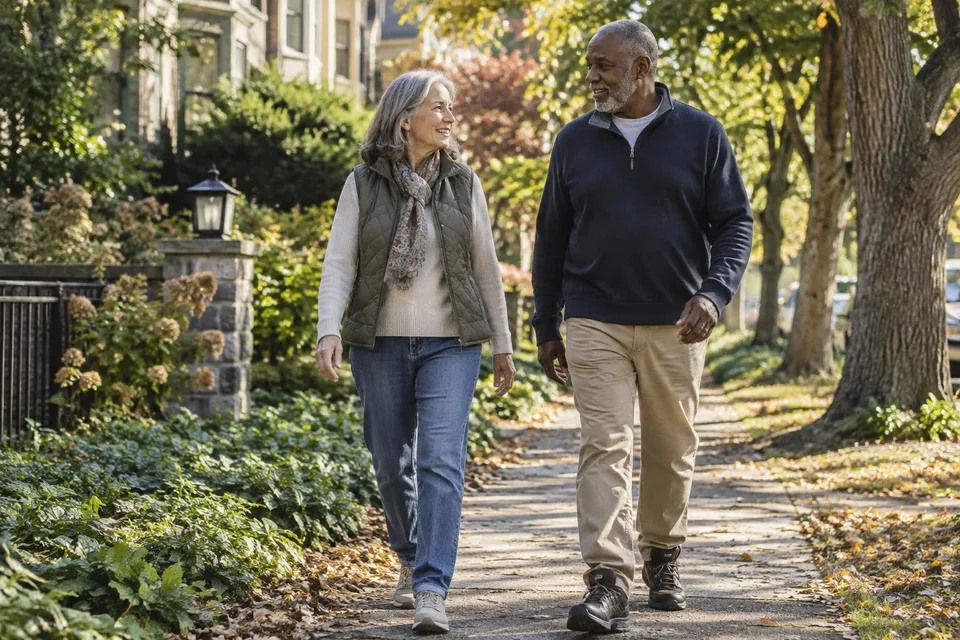
For a generally well adult who can walk comfortably, an easy five-to-ten-minute loop after a convenient meal is a practical habit experiment, not a validated prescription for everyone. If a large meal makes immediate movement uncomfortable, allow time for comfort. Avoid turning the walk into hard intervals simply to chase a lower number.
04
Make the habit fit the place you already are
At work, the route might be one level hallway or a short outdoor loop. At home, it might mean putting on shoes before you sit down for the evening. Choose a safe, accessible setting and an effort that lets you converse.
Tie the action to a dependable cue: clear the table, then walk. If walking is not accessible, ask a qualified professional which seated or adapted movement is appropriate. This article does not assume that another movement produces exactly the same effect as the walking trials.
05
Keep glucose in the context of your whole health
The goal is not to flatten every normal rise after eating or earn permission to have a meal. A walk is one option within a broader pattern of regular activity, sufficient nutrition, sleep, and appropriate preventive care. Walking also does not train every balance skill. Balance training for healthy aging is the separate piece, especially if you feel unsteady.
If you already monitor glucose for diabetes, review patterns and exercise plans with your care team. Do not change medicine doses based on this article. If you do not have diabetes, these studies alone are not a reason to purchase a monitor or become fearful of ordinary carbohydrate-containing foods.
Put it into practice
Try one comfortable after-meal walk
- 01
Choose one meal and a safe, level route you can repeat.
- 02
Start with an easy duration that fits your ability; five to ten minutes is an example, not a required dose.
- 03
Keep the effort conversational and stop if you feel unwell.
- 04
If you use glucose-lowering medicine, follow your care team's monitoring and low-glucose plan.
- 05
Judge whether the habit is comfortable and repeatable, while keeping your broader movement routine.
Safety first
When general advice is not enough
- Insulin and sulfonylureas can cause low blood glucose during or after activity. Discuss precautions with your clinician; do not adjust medication independently.
- Chest pressure, fainting, severe breathlessness, or signs of serious illness are reasons to stop and seek urgent care, not push through a glucose target.
- Foot wounds, impaired sensation, balance problems, recent surgery, or unstable medical conditions may require a different activity plan.
A few useful follow ups
Do I have to walk immediately after eating?
No exact start time is established for everyone. Choose a comfortable time near a meal that fits your health needs and routine.
Is ten minutes enough?
Some short trials support benefits from ten-minute walks, but that does not make ten minutes a universal dose or a replacement for a complete activity plan.
Does walking after dinner prevent diabetes?
The acute studies discussed here do not establish that outcome. Short-term changes in glucose are not the same as proof of long-term disease prevention.
Should I skip carbohydrates instead?
Not on the basis of these studies. Food quality, adequate intake, your overall pattern, and individualized clinical needs matter; movement should not become compensation for eating.
Related reading
Build the full picture
Sources and further reading
Primary guidance and research reviewed for this article.
Randomized trial of ten-minute walks after meals in type 2 diabetes ↗2025 trial of walking after glucose intake ↗2026 systematic review of acute postprandial exercise and glucose monitoring ↗2024 meta-analysis comparing activity before and after meals ↗NIDDK: staying safe with physical activity and diabetes ↗
Sung Won, MD
A longevity & performance educator and health coach focused on evidence-based longevity, plant-forward nutrition, and habits people can sustain. His career began in orthopedic spine surgery.
Read the full biography →