Four things to remember
Whatever is in your cart becomes what's in your kitchen, and what's in your kitchen becomes dinner when you're tired.
A default list removes dozens of small decisions each week. Fewer decisions means better ones.
Plant forward is not a purity test. It means vegetables, fruit, legumes, whole grains, nuts and seeds do more of the work on your plate. You don't have to go fully plant-based to make real progress.
Some nutrients need a deliberate plan on a mostly plant-based pattern, especially vitamin B12.
Why the cart matters more than willpower
Most people get this backwards. They try to fix their eating at the table, with willpower. I believe the fix happens in the store.
When I was a surgeon, the outcome of an operation depended heavily on preparation that happened long before the first incision: the imaging, the plan, the instruments laid out in order. Eating works the same way. By the time you're standing in front of an open refrigerator at 8 p.m., most of the decision has already been made. Either the ingredients for a good meal are there, or they aren't.
That's why I treat the grocery cart as part of my health blueprint. An architect doesn't start with the paint color; they start with the foundation, because everything else rests on it. In your eating, the foundation is what you bring home. It's not glamorous, and it doesn't make headlines the way a new supplement or test does. But it quietly shapes hundreds of meals a year.
Public dietary guidance has been consistent for a long time on the broad pattern: more vegetables, fruit, whole grains and legumes, and less of the highly processed foods that crowd them out. The hard part is building a week where it happens without a fight.
The goal is not to optimize every meal. It's to make the healthier choice easier to repeat.
Step 1: Draw the default list
A default list is the set of foods you buy almost every week without thinking about it. It's the single most useful tool I know for plant-forward eating, because it turns a weekly decision into a habit.
Organize it by category, not by recipe:
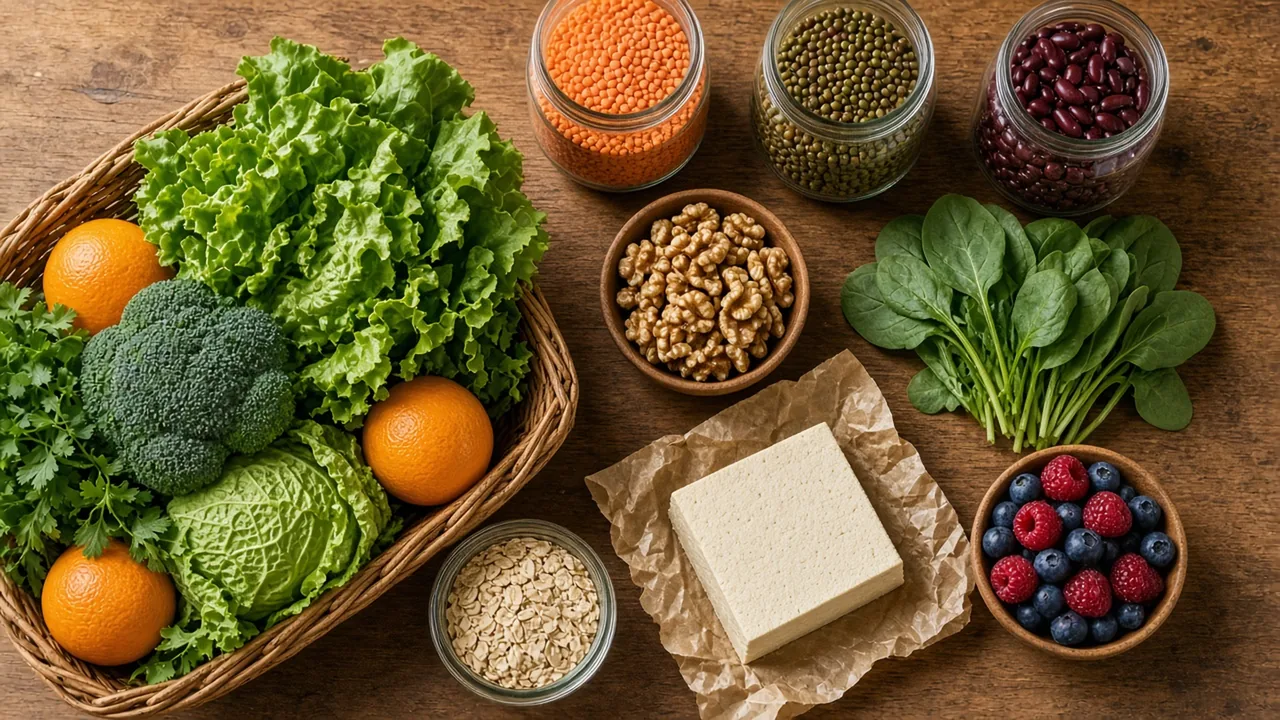
- Vegetables: a few you'll eat raw (greens, cucumbers, peppers, carrots), a few that roast well (broccoli, cauliflower, sweet potatoes, Brussels sprouts) and frozen vegetables as a backup. Frozen vegetables are not a compromise; they're insurance.
- Fruit: something for the counter, something for the freezer (berries work well) and something sturdy that lasts the week.
- Legumes: dried or canned beans, lentils and chickpeas, plus tofu, tempeh or edamame if you like them. Canned is fine; rinsing reduces added sodium.
- Whole grains: two or three you'll actually cook, such as oats, brown rice, farro, quinoa or whole-grain bread.
- Nuts and seeds: a small rotation, such as walnuts, almonds, chia, flax or pumpkin seeds.
- Flavor: this is where many plant-forward plans fail. Keep garlic, onions, lemons or limes, herbs, spices, vinegar, a good olive oil and a sauce or two you enjoy. Food you look forward to is food you'll keep eating.
Your list will look different from mine, and it should. Culture, budget and family preferences all matter.
Step 2: Choose the protein first
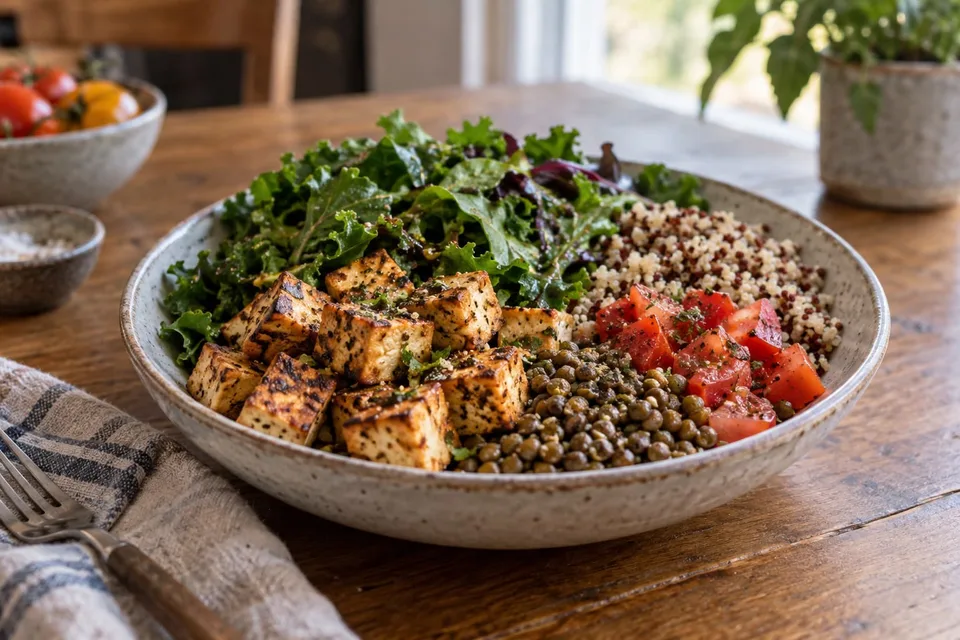
One of the most common problems with plant-forward eating is a plate that's colorful but not very filling. The fix is simple: choose the protein source before you choose the garnish.
When you build your list, ask what the protein anchor will be for most meals this week: lentils in a soup, beans in a grain bowl, tofu in a stir-fry, Greek yogurt or eggs if you include them, or fish if that's part of your pattern. Plant forward doesn't require giving up every animal food. It means plants do more of the work.
If you train regularly, especially after 50, protein deserves more thought. I've written separately about building a high-protein plant-forward day and about protein needs with age. Link: /articles/high-protein-plant-forward-meals
Step 3: Build one prep block into the week
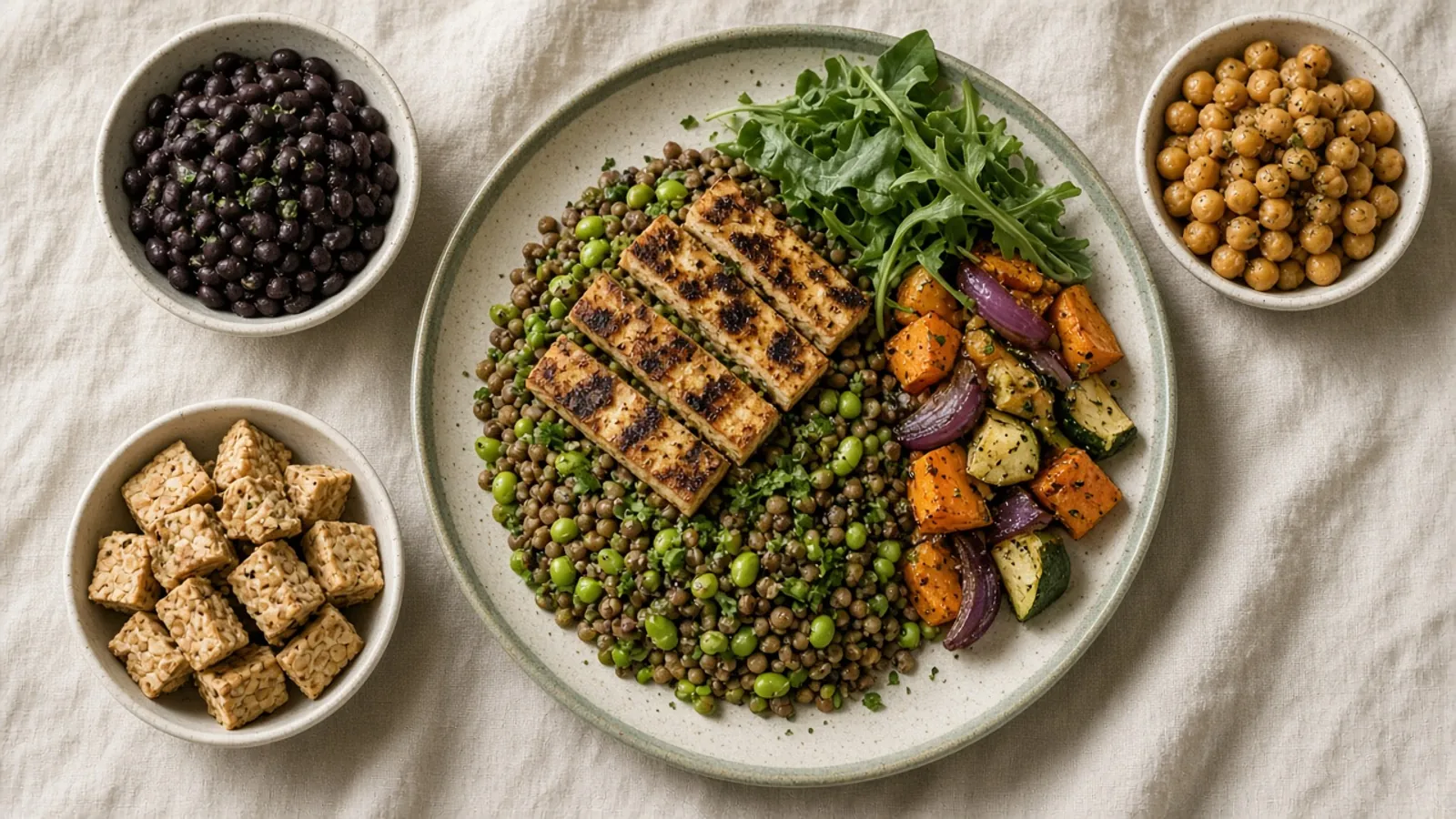
One prep block of about an hour, on whatever day works for you, can make most weekday meals faster than takeout.
A simple rotation:
- A pot of legumes. Lentils or beans, cooked or simply drained and seasoned from cans.
- A tray of roasted vegetables. Whatever's on your list, cut similar sizes, roasted together.
- A grain. A batch of rice, farro or quinoa that keeps for several days.
- A sauce. Something with flavor, such as a tahini-lemon dressing, a salsa, a vinaigrette or a peanut sauce.
- Washed greens or cut raw vegetables that are ready to grab.
With those five components in the refrigerator, a bowl, a wrap, a salad or a quick stir-fry takes minutes. Follow standard food-safety guidance for how long cooked food keeps.
Step 4: Add a plant to every meal
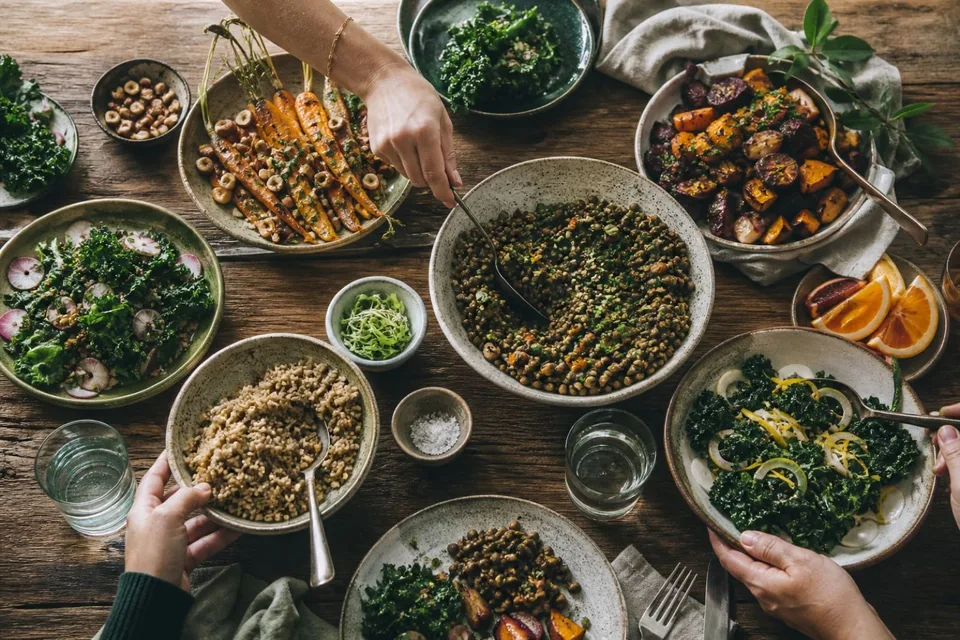
Rather than overhauling everything at once, add one plant to each meal you already eat. Berries on breakfast. Beans in the soup. A handful of greens next to whatever's for dinner. A piece of fruit and some nuts instead of a packaged snack.
This "add, don't subtract" approach is easier to sustain than a list of forbidden foods, and it crowds out less useful choices on its own.
If you're increasing fiber noticeably, go gradually; your gut needs time to adapt. [Link: /learn/fiber-and-microbiome]
Decide once, then repeat. A default list turns a weekly decision into a habit.
Meet yourself where you are
I eat a fully plant-based diet myself. I don't think you have to in order to make meaningful progress. If your plate shifts from mostly meat and refined grains to mostly vegetables, legumes, whole grains and fruit, with smaller amounts of fish, eggs, dairy or poultry if you choose them, that's a real structural improvement. A blueprint you'll actually build beats a perfect one that stays in the drawer.
Where I draw the line: carnivore and "animal-based" diets
I don't recommend carnivore or "animal-based" diets, and I want to be clear about why.
These patterns remove most or all of the food groups that dietary guidelines from the United States and the World Health Organization consistently recommend people eat more of: vegetables, fruit, legumes, whole grains, nuts and seeds. Dietary fiber comes only from plant foods, so a meat-only diet provides essentially none. And the World Health Organization's cancer agency classifies processed meat as carcinogenic to humans and red meat as probably carcinogenic to humans. Those classifications describe the strength of the evidence, not the size of the risk for any one person, but they point in the opposite direction from building a diet around meat.
When people feel better on a carnivore diet, look at what they stopped eating: highly processed foods and added sugars. You can drop those without dropping plants. Removing junk food is a good renovation. Removing the foundation is not.
A blueprint you'll actually build beats a perfect one that stays in the drawer.
Make one nutrient explicit: vitamin B12
A colorful, mostly plant-based plate can cover a lot, but it doesn't by itself tell you whether vitamin B12 is covered. B12 is found naturally mainly in animal foods, so people who eat few or no animal foods generally need a reliable source such as fortified foods or a supplement. The National Institutes of Health Office of Dietary Supplements has a clear consumer fact sheet on B12. This is a good conversation to have with your own clinician, especially if you take medications or have health conditions that affect absorption.
Supplements can fill a specific, identified gap like this one. They are not a substitute for the foundation.
A practical starting week
If you want to try this without redesigning your life:
- This week: draw your first blueprint by writing a default list with at least one item in each category above. Buy it.
- Prep block: cook one legume, one grain and one tray of vegetables. Make one sauce.
- Every meal: add one plant.
- End of the week: notice what you actually ate and what went to waste. Adjust the list. That's the whole blueprint.
The first version won't be perfect. It doesn't need to be. Systems improve because you repeat them and adjust, not because the first draft was right.
When general advice is not enough
- If you have kidney disease, diabetes managed with medication, a digestive condition, food allergies, a history of disordered eating, or you're pregnant or breastfeeding, talk with your clinician or a registered dietitian before making significant dietary changes.
- Some medications interact with specific foods. Ask your pharmacist or prescriber if you're unsure.
- Children, older adults with reduced appetite and people with high training loads have different needs from the general pattern described here.
A few useful follow-ups
Do I have to go fully plant-based? No. I'm plant-based myself, but plant forward simply means plants do more of the work. Many people do well with a pattern that includes some animal foods.
How do I make this work on a budget? Dried and canned legumes, frozen vegetables, oats, rice and seasonal produce are among the most affordable foods in the store. A default list also reduces impulse purchases.
The weekly shop is in plant forward eating on a budget.
Sources and further reading
- Dietary Guidelines for Americans: https://www.dietaryguidelines.gov/
- World Health Organization, Q&A on the carcinogenicity of red meat and processed meat (IARC): https://www.who.int/news-room/questions-and-answers/item/cancer-carcinogenicity-of-the-consumption-of-red-meat-and-processed-meat
- NIH Office of Dietary Supplements, Vitamin B12 consumer fact sheet: https://ods.od.nih.gov/factsheets/VitaminB12-Consumer/
- Related on this site: What does plant forward mean? [/learn/plant-forward-eating] · Build a high-protein plant-forward day /articles/high-protein-plant-forward-meals